

আরশোলার ব্যাকরণ ও সাংস্কৃতিক আধিপত্য
তরুণের স্পন্দন ও রাষ্ট্রের সংলাপ
বিংশ শতাব্দীর মধ্যভাগ পেরিয়ে এসে একবিংশ শতকের এই সন্ধিক্ষণে দাঁড়িয়ে ভারতবর্ষ আজ এক অভূতপূর্ব জনমিতিক সুবিধাজনক স্থানে অবস্থান করছে। পৃথিবীর সর্ববৃহৎ যুবশক্তির স্পন্দন এখন এই দেশের ধমনীতে। তরুণ প্রজন্মের এই বিপুল উপস্থিতি রাষ্ট্রব্যবস্থার সম্মুখে একই সঙ্গে এক অনন্ত সম্ভাবনা এবং এক সুগভীর পরীক্ষা। এই নবীন প্রজন্মের মনস্তাত্ত্বিক ক্যানভাসটিকে বুঝতে পারলে তবেই চেনা যাবে আগামী ভারতের রাজনৈতিক ও সামাজিক ভবিতব্য। সম্প্রতি মুম্বইয়ে দেশের এই নবীন প্রজন্মের প্রতিনিধি তথা জেন-জি (Gen-Z) এবং জেন-আলফা (Gen-Alpha) -দের সাথে এক মনোগ্রাহী বার্তালাপে অংশ নিয়েছিলেন রাষ্ট্রীয় স্বয়ংসেবক সঙ্ঘের সরসঙ্ঘচালক ডঃ মোহন ভাগবত। তাঁর মূল্যায়নে উঠে এসেছে এক চমকপ্রদ সত্য। তিনি এই প্রজন্মকে ভারতের “সবচেয়ে সৎ এবং সত্যনিষ্ঠ” প্রজন্ম বলে অভিহিত করেছেন। তাঁর মতে, এই প্রজন্মের তরুণ-তরুণীদের মনে দেশভক্তি এবং পরার্থসেবার এক গভীর, সরল ও আন্তরিক আকাঙ্ক্ষা রয়েছে। তারা আজ আর কোনো আপ্তবাক্য বা প্রাচীন প্রথাকে অন্ধভাবে মেনে নিতে রাজি নয়; তাদের প্রয়োজন যুক্তিযুক্ত ব্যাখ্যা এবং যুক্তিসঙ্গত উত্তর। আর এই উত্তরের অন্বেষণে তাদের প্রয়োজন অপরিসীম ভালোবাসা ও সহমর্মিতা।
গণতান্ত্রিক রাষ্ট্রব্যবস্থায় এই তরুণদের ক্ষোভ এবং তার প্রকাশকে ডঃ ভাগবত অত্যন্ত ভিন্ন এক মাত্রা দিয়ে বিশ্লেষণ করেছেন। তাঁর মতে, গণতন্ত্রে যখন নিয়মতান্ত্রিক সংলাপ বা দ্বিমুখী আলোচনা থমকে যায়, তখন রাজপথে আন্দোলন গড়ে তোলাও আসলে প্রতিবাদের বা ঐকমত্য গড়ে তোলার একটি বৈধ উপায় হয়ে উঠতে পারে। আন্দোলন কোনো বিচ্ছিন্ন বিষয় নয়, এটিও এক প্রকারের কঠিন সংলাপ। তবে এই প্রতিবাদের একটি নির্দিষ্ট লক্ষ্য ও ভাষা থাকা বাঞ্ছনীয়। সংলাপের ঐতিহ্যকে ভারতের প্রাচীন ‘শাস্ত্রার্থ’ দর্শনের সঙ্গে তুলনা করে সরসঙ্ঘচালক মনে করিয়ে দেন, সেখানে কোনো জয়-পরাজয়ের সস্তা অহংকার থাকে না। শাস্ত্রার্থে থাকে ‘পূর্বপক্ষ’ এবং ‘উত্তরপক্ষ’, যার যৌথ মন্থনে উন্মোচিত হয় পরম সত্যের রূপরেখা। কিন্তু যখন এই গঠনমূলক প্রতিবাদের সরল আবেগকে অপব্যবহার করে এক সুপরিকল্পিত রাজনৈতিক ষড়যন্ত্রের বীজ বপন করা হয়, এবং যখন সেই আন্দোলন নিয়মতান্ত্রিক সাংবিধানিক পথ ছেড়ে নৈরাজ্যের পথে পা বাড়ায়, তখনই সমাজ ও রাষ্ট্রের অখণ্ডতা এক মহাসংকটের মুখে পড়ে।
সাম্প্রতিক সময়ে সংঘটিত সিজেপি —যা নেটমাধ্যমে ‘কোকরোচ জনতা পার্টি’ নামে পরিচিত—আন্দোলনটিকে ভারতের জাতীয় নিরাপত্তা ও রাজনৈতিক পটভূমির একটি গুরুত্বপূর্ণ ‘কেস স্টাডি’ হিসেবে বিবেচনা করা প্রয়োজন। এটি কোনো আকস্মিক ছাত্র অসন্তোষের বহিঃপ্রকাশ ছিল না, বরং তা ছিল সুপরিকল্পিত এবং দীর্ঘমেয়াদী একটি প্রক্রিয়ার ফলশ্রুতি। এই জটিল আন্দোলনের গতিপ্রকৃতি অনুধাবন করতে হলে এর কালানুক্রম (ক্রোনোলজি), সুনির্দিষ্ট কার্যপদ্ধতি (মেথডোলজি), প্রাতিষ্ঠানিক সমর্থন কাঠামো (সাপোর্ট সিস্টেম) এবং সর্বোপরি এর পেছনের আদর্শগত ভিত্তি বিশ্লেষণ করা আবশ্যক।
ক্লাউড ক্রাউড থেকে যন্তর মন্তর
আন্দোলনের ক্রোনোলজি বা কালানুক্রমের দিকে নজর দিলে এর কৃত্রিম গঠনের স্পষ্ট প্রমাণ মেলে। আন্দোলনের সূত্রপাত ঘটেছিল কানাডায় বসবাসরত অভিজিৎ দিপকের হাত ধরে। সিজেপি যখন প্রথম ডিজিটাল মঞ্চে অবতীর্ণ হয়, তখন মাত্র দুই-তিন দিনের মধ্যে এটি অভূতপূর্ব সামাজিক প্রচার লাভ করে। এই প্রাথমিক ভার্চুয়াল সাফল্যে উদ্বুদ্ধ হয়ে দিপকে ৬ জুন ভারতে আসেন এবং ৭ জুন থেকে সরাসরি প্রতিবাদের সূচনা করেন।
তবে অনলাইনের সেই বিপুল প্রচারের সঙ্গে ভারতের মাঠে-ঘাটের বাস্তবতার সাযুজ্য ছিল না। ৭ জুন থেকে ১৯ জুন পর্যন্ত দিপকে ভারতের বিভিন্ন শহরে ঘুরে ঘুরে গণআন্দোলন গড়ে তোলার চেষ্টা করলেও তা চরম ব্যর্থতায় পর্যবসিত হয়। কোনো উল্লেখযোগ্য সাড়া না পেয়ে, ২০ জুন থেকে দিল্লির যন্তর মন্তরে একটি স্থায়ী অবস্থান বিক্ষোভ শুরু করা হয়। এই পর্যায় থেকেই আন্দোলনের সামগ্রিক রূপ, বৈভব ও এস্থেটিক্সে এক বিরাট পরিবর্তন লক্ষ্য করা যায়।
ছাত্রদের একটি স্বাভাবিক ক্ষোভের ওপর ভর করে কীভাবে এক বিশাল সাংগঠনিক জাল ছড়িয়ে দেওয়া হলো, তা বোঝা যায় এই আন্দোলনের সাথে যুক্ত হওয়া দীর্ঘ তালিকাটি পর্যালোচনা করলে। যুব ও ছাত্রদের আন্দোলন হওয়ার সুযোগ নিয়ে বামপন্থী ছাত্র সংগঠন ‘আইসা’ (AISA) এবং ‘এসএফআই’ (SFI) মঞ্চের সামনের সারিতে চলে আসে এবং পুরো লজিস্টিকস নিজেদের নিয়ন্ত্রণে নেয়। এর পরক্ষণেই যুক্ত হয় ‘অ্যামনেস্টি ইন্টারন্যাশনাল’, ‘হিউম্যান রাইটস ওয়াচ’, এবং ‘পিইউসিএল’ (PUCL)-এর মতো আন্তর্জাতিক ও জাতীয় স্তরের মানবাধিকার সংগঠনগুলি। এদের সাথে হাত মেলায় অল ইন্ডিয়া ইউনিয়ন অফ ফরেস্ট ওয়ার্কিং পিপল, বাপসা (BAPSA) এবং অল ট্রাইবাল আসাম স্টুডেন্টস ইউনিয়নের মতো উপজাতি সংগঠনগুলি। যোগ দেয় পিঞ্জরা তোড় কালেক্টিভ এবং ন্যাশনাল ফেডারেশন অফ ইন্ডিয়ান উইমেনের মতো উগ্র নারীবাদী সংগঠনগুলিও। স্টুডেন্টস ইসলামিক অর্গানাইজেশন (SIO) এবং মাইনরিটি অ্যান্ড বহুজন রাইট ফোরামের মতো ধর্মীয়-রাজনৈতিক মঞ্চের পাশাপাশি ইউনাইটেড খ্রিস্টান ফোরাম এবং অল ইন্ডিয়া ক্যাথলিক ইউনিয়নের মতো এলিট খ্রিষ্টান প্রতিষ্ঠানগুলিও একই ছাতার তলায় জড়ো হয়। এডিটরস গিল্ড অফ ইন্ডিয়া ও রিপোর্টার্স উইদাউট বর্ডার্স-এর মতো প্রেস অ্যাসোসিয়েশন এবং সংযুক্ত কিষাণ মোর্চা ও ভারতীয় কিষাণ ইউনিয়নের মতো কৃষক সংগঠনগুলিও এই জোটে সরাসরি অংশ নেয়।
এই চরম বৈচিত্র্যময় ও স্বার্থসংঘাতপূর্ণ জোটকে একটি অভিন্ন প্ল্যাটফর্মে সুসংহত করার নেপথ্য মেথডোলজিটি গভীরভাবে অনুধাবন করা প্রয়োজন। যন্তর মন্তরের মঞ্চ থেকে ক্রমশ ছাত্র অধিকারের দাবি সরে গিয়ে স্থান পায় কট্টর সনাতন ধর্মবিরোধিতা এবং দেশভাগের উসকানিমূলক স্লোগান। বামপন্থী চিন্তাবিদরা সাধারণ শিক্ষার্থীদের উদ্বেগ ও মানসিক যন্ত্রণাকে হাতিয়ার করে আন্দোলনের নেতৃত্বকে নিজেদের কুক্ষিগত করে নেন, যা কার্যত একটি অরাজনৈতিক আন্দোলনকে বিশুদ্ধ রাজনৈতিক অস্ত্র হিসেবে ব্যবস্থার বিরুদ্ধে খাড়া করে।
গ্রামস্কির ‘ওয়ার অফ পজিশন’, ‘কালচারাল হেজিমনি’ ও বিকল্প রাজনীতির রণকৌশল
চিন্তাবিদ অতুল লিমার সুচিন্তিত এবং দীর্ঘ তাত্ত্বিক বিশ্লেষণে স্পষ্ট হয়ে উঠেছে যে, সিজেপি আন্দোলনটি নিছক কোনো আকস্মিক ছাত্র অসন্তোষের বহিঃপ্রকাশ ছিল না। এর পিছনে কাজ করেছে এক অত্যন্ত জটিল ‘ক্রোনোলজি’ বা কালানুক্রম এবং সুনিপুণ ‘মেথডোলজি’ বা কার্যপদ্ধতি। এই ব্যবস্থার বিরুদ্ধে লড়াইয়ের দার্শনিক তত্ত্বটি অনুসন্ধান করলে আমাদের ইতালীয় মার্ক্সবাদী তাত্ত্বিক আন্তোনিও গ্রামস্কির ‘সাংস্কৃতিক আধিপত্য’ (Cultural Hegemony) তত্ত্বের মুখোমুখি হতে হয়। গ্রামস্কি ছিলেন বিংশ শতাব্দীর শুরুর এক মিলিট্যান্ট অ্যাক্টিভিস্ট ও বুদ্ধিজীবী, যাঁর রাজনৈতিক দর্শন তৎকালীন ইতালির শাসক মুসোলিনিকে এতটাই ভীত করেছিল যে তাঁকে আজীবন কারাবাসে কাটাতে হয়। বিচারের সময় সরকারি কৌসুলি আদালতে দাঁড়িয়ে বলেছিলেন, “এই মস্তিষ্কটিকে আগামী কুড়ি বছরের জন্য নিষ্ক্রিয় করে দিতে হবে।”
কারাগারের অন্ধকক্ষে বসেই গ্রামস্কি বিশ্লেষণ করেছিলেন কেন প্রথাগত মার্ক্সীয় বিপ্লব ইউরোপের উন্নত পুঁজিবাদী দেশগুলিতে ব্যর্থ হচ্ছিল। তিনি দেখালেন যে, শাসক শ্রেণী কেবল পুলিশ, সেনা বা আদালতের মতো আইন-প্রয়োগকারী রাষ্ট্রযন্ত্র (পলিটিক্যাল সোসাইটি) দিয়ে শাসন করে না, বরং তারা শাসন করে বিদ্যালয়, চার্চ, গণমাধ্যম ও বিশ্ববিদ্যালয়ের মতো সুশীল সমাজের (সিভিল সোসাইটি) মাধ্যমে। এই ব্যবস্থার মাধ্যমে তারা সমাজে এক ধরণের সাংস্কৃতিক হেজিমনি বা আধিপত্য তৈরি করে, যা শাসন শোষণকে সাধারণ মানুষের কাছে ‘কমন সেন্স’ বা প্রাকৃতিকভাবে স্বাভাবিক বলে প্রতিপন্ন করে। তাই রাষ্ট্র ক্ষমতা দখলের জন্য সরাসরি সশস্ত্র বিপ্লব বা ‘ওয়ার অফ ম্যানুভার’ করার আগে একটি দীর্ঘমেয়াদী, ধৈর্যশীল মতাদর্শগত যুদ্ধ বা ‘ওয়ার অফ পজিশন’ (War of Position) পরিচালনা করা প্রয়োজন, যা সমাজের এই প্রতিষ্ঠিত তথাকথিত বুর্জোয়া সাংস্কৃতিক আধিপত্যকে ভেতর থেকে চূর্ণ করবে।
সিজেপি-র আন্দোলনকারীরা ঠিক এই গ্রামস্কিয়ান রণকৌশল অবলম্বন করেছিল, যার তাত্ত্বিক পরিভাষা হলো ‘বিকল্প রাজনীতি’ (Alternative Politics)। এই দর্শনের মূল ভিত্তি হলো “গণতান্ত্রিক উপায়ে গণতন্ত্রের পতন ঘটানো” (Subversion of democracy through democratic means)। যেহেতু সংসদীয় গণতান্ত্রিক ব্যবস্থায় নির্বাচনে জয়ী হয়ে রাতারাতি শাসন ক্ষমতা অর্জন এদের পক্ষে সম্ভব নয়, তাই তারা গণতন্ত্র প্রদত্ত বাকস্বাধীনতা ও প্রতিবাদের অধিকারকে হাতিয়ার করে রাষ্ট্রযন্ত্রের স্তম্ভগুলিকে অকেজো করার কৌশল নেয়।
এই বিকল্প রাজনীতির অংশ হিসেবে তারা ‘ডিকনস্ট্রাকশন থিওরি’ (Deconstruction Theory) প্রয়োগ করে ভারতীয় ঐতিহ্যের প্রাণপুরুষ শ্রীরামচন্দ্রের মতো সাংস্কৃতিক আদর্শ চরিত্রদের নারী-বিরোধী বা দলিত-বিরোধী আখ্যা দিয়ে সমাজের রন্ধ্রে রন্ধ্রে থাকা বিশ্বাসকে ধ্বংস করতে সচেষ্ট হয়। আন্দোলনের সময় দিল্লির রাজপথে মোতায়েন থাকা পুলিশ বাহিনীর জবানবন্দিতে উঠে এসেছে চরম শঙ্কার ছবি। আন্দোলনকারী তরুণীদের উগ্র পোশাক, অশালীন অঙ্গভঙ্গি এবং কুশ্রাব্য স্লোগান সনাতন ভারতীয় মূল্যবোধের চরম অবক্ষয়কে স্পষ্ট করে দেয়। পারিবারিক কাঠামো ভাঙার এই প্রক্রিয়ায় বামপন্থী আন্দোলনের প্রথম সারির নেত্রী নেহা বোরা গর্বের সাথে প্রচার করেন যে, তাঁর পিতা একজন ভারতীয় সেনা হওয়া সত্ত্বেও তাঁর সঙ্গে সম্পর্ক ছিন্ন করেছেন, কারণ তিনি বামপন্থী রাজনীতি করেন। এই ধরণের পারিবারিক ভাঙন ও পিতৃদ্রোহকে বীরত্ব হিসেবে মহিমান্বিত করা আসলে পরিবার ও ঐতিহ্যের সুরক্ষাবলয় থেকে যুবসমাজকে বিচ্ছিন্ন করার এক সচেতন কৌশল।
চিন্তাবিদ অতুল লিমার বিশ্লেষণ অনুযায়ী, এই বিকল্প রাজনীতির নিখুঁত পাঁচ ধাপের একটি মডেল রয়েছে: ১. Tactical Infiltration (কৌশলগত অনুপ্রবেশ): বিচারব্যবস্থা, শিক্ষাব্যবস্থা ও প্রশাসনে সুপরিকল্পিতভাবে বামপন্থী মতাদর্শের লোকেদের অনুপ্রবিষ্ট করানো এবং শিক্ষা প্রতিষ্ঠানে ‘ক্রিটিক্যাল থিওরি’ ও কর্পোরেট সেক্টরে ডাইভারসিটি ইনডেক্সের মতো ধারণার অনুপ্রবেশ ঘটানো। ২. Demoralizing Institutions (প্রতিষ্ঠানের মনোবল ভাঙা): নির্বাচন কমিশন, বিচারব্যবস্থা ও পুলিশের মতো প্রধান স্তম্ভগুলির প্রতি মানুষের আস্থা নষ্ট করা। প্রশাসনের যেকোনো ছোটখাটো ভুলকে সোশ্যাল মিডিয়ায় বিরাট করে দেখিয়ে একটি সুপরিকল্পিত ‘অ্যাসিমেট্রিক ন্যারেটিভ’ তৈরি করা। ৩. War of Position (ন্যারেটিভের যুদ্ধ): সাহিত্য, সিনেমা, থিয়েটার ও বিশ্ববিদ্যালয়ের সিলেবাসের মাধ্যমে ঐতিহ্যবাহী রাষ্ট্রীয় সংহতিকে আক্রমণ করে এক ক্ষয়িষ্ণু সংস্কৃতির বিস্তার ঘটানো। ৪. Cultural Degradation (সাংস্কৃতিক অবক্ষয়): লিভ-ইন সম্পর্কের মতো সামাজিক জীবনযাত্রাকে স্বাভাবিকীকরণ করে চিরাচরিত পারিবারিক বন্ধনকে দুর্বল করে দেওয়া। ৫. Street Agitations (রাস্তার আন্দোলন): চূড়ান্ত পর্যায় হিসেবে লাগাতার রাজপথের আন্দোলন ও অরাজকতা সৃষ্টি করে রাষ্ট্রকে পক্ষাঘাতগ্রস্ত করা।
আম্বেদকরের ‘অরাজকতার ব্যাকরণ’ বনাম সিজেপি-র দ্বিচারিতা
এই সংকটের পটভূমিতেই আজ অত্যন্ত প্রাসঙ্গিক হয়ে ওঠে ড. বাবাসাহেব আম্বেদকরের ঐতিহাসিক দূরদর্শিতা ও সাবধানবাণী। ১৯৪৯ সালের ২৫ নভেম্বর, ভারতের গণপরিষদের শেষ ভাষণে বাবাসাহেব স্বাধীন ভারতবর্ষের জন্য তিনটি সুগভীর সতর্কবার্তা উচ্চারণ করেছিলেন। তিনি স্পষ্ট ভাষায় বলেছিলেন যে, যতক্ষণ পর্যন্ত দেশে সাংবিধানিক ও আইনি পথ উন্মুক্ত রয়েছে, ততক্ষণ পর্যন্ত রাজপথে নেমে আইন অমান্য, অসহযোগ বা সত্যাগ্রহের মতো অসাংবিধানিক সহিংস প্রতিবাদের কোনো স্থান থাকতে পারে না। তিনি এই ধরণের অতিরিক্ত-সাংবিধানিক পথকে অত্যন্ত কঠোর ভাষায় “অরাজকতার ব্যাকরণ” (Grammar of Anarchy) বলে চিহ্নিত করেছিলেন এবং সতর্ক করেছিলেন যে, এই ব্যাকরণকে যদি বর্জন করা না হয়, তবে আমাদের শ্রমলব্ধ গণতন্ত্রের প্রাসাদ ধূলিসাৎ হতে বাধ্য। তিনি বিশেষভাবে বামপন্থী এবং সমাজবাদী শক্তিগুলির অন্তর্নিহিত অসাংবিধানিক চরিত্র সম্পর্কে সতর্ক করেছিলেন, যারা সংবিধানের ছায়াকে কেবল নিজেদের স্বার্থে ব্যবহার করে এবং সুযোগ পেলেই সাংবিধানিক কাঠামোকে সমূলে উপড়ে ফেলতে চায়।
সিজেপি আন্দোলনের সবচেয়ে বড় বৈপরীত্য ও হিপোক্রেসি হলো, তারা দিল্লির যন্তর মন্তরের আন্দোলন স্থলকে ড. আম্বেদকরের ছবি দিয়ে সাজিয়েছিল এবং সংবিধানের প্রস্তাবনা পাঠের মাধ্যমে নিজেদের আইনি ও নৈতিক বৈধতা প্রমাণের এক নাটুকে চেষ্টা করেছিল। কিন্তু তাদের কার্যক্ষেত্রে বাবাসাহেবের এই “অরাজকতার ব্যাকরণ”-এরই এক উগ্র প্রয়োগ আমরা দেখতে পেয়েছি। সুপ্রিম কোর্টের মতো ভারতের সর্বোচ্চ সাংবিধানিক আদালতের অন্তর্বর্তীকালীন রায় (Direction No. 4)-কে প্রকাশ্যে রাস্তায় দাঁড়িয়ে প্রত্যাখ্যান করার ধৃষ্টতা দেখিয়েছিল এই আন্দোলনের নেতৃত্ব। তারা হুমকি দিয়েছিল যে, হিংসাত্মক দাঙ্গাকারীদের বিরুদ্ধে আইনি তদন্ত বন্ধ না হলে তারা পুনরায় রাজপথ অচল করবে। বামপন্থী বুদ্ধিজীবী যোগেন্দ্র যাদব যেমনটি বলেছিলেন যে, “গণতন্ত্রের ভবিষ্যৎ এখন আর সংসদ ঠিক করবে না, রাস্তা ঠিক করবে; নির্বাচন ঠিক করবে না, প্রতিরোধ ঠিক করবে।” এটি কার্যত বাবাসাহেব আম্বেদকরের আজীবন সাধনার ফসল ভারতের সংসদীয় গণতন্ত্র ও সংবিধানের বিরুদ্ধে এক ঘৃণ্য যুদ্ধ ঘোষণা।
স্বতঃস্ফূর্ততার আড়ালে পেশাদার ছক
সিজেপি আন্দোলনের তথ্য বিশ্লেষণ করলে দেখা যায়, এই আন্দোলনের তথাকথিত ‘স্বতঃস্ফূর্ত ছাত্র আন্দোলন’-এর মুখোশটি সম্পূর্ণ খসে পড়ে। দিল্লির পুলিশের সাম্প্রতিক তদন্ত এবং ডেটা বিশ্লেষণ প্রমাণ করে যে, এই আন্দোলনের নেপথ্যে সক্রিয় ছিল প্রায় ১৮০ জন অত্যন্ত প্রভাবশালী সোশ্যাল মিডিয়া ইনফ্লুয়েন্সার এবং ৩টি অত্যন্ত পেশাদার পিআর (PR) এজেন্সি (যার মধ্যে সম্প্রতি পুলিশ রেইড হওয়া ‘Barcode Entertainment’ অন্যতম)। ছাত্রদের দুঃখ ও ক্ষোভকে কৃত্রিমভাবে ভাইরাল করার জন্য লক্ষ লক্ষ টাকা ঢেলে এই ডিজিটাল প্রচার চালানো হয়েছিল। ইনস্টাগ্রাম প্ল্যাটফর্মটিকে ব্যবহার করা হয়েছিল এক সুতীব্র মানসিক উত্তেজনা এবং আবেগ ছড়ানোর জন্য, যা পরবর্তীতে একটি পরিকল্পিত রাজনৈতিক হাতিয়ার হিসেবে টুইটার বা ‘এক্স’ (X) প্ল্যাটফর্মে স্থানান্তরিত করা হয়। তথ্য বলছে, ইনস্টাগ্রামে আন্দোলনের চরম রূপ দেখার ঠিক ১১ দিন পর টুইটারে এই নিয়ে রাজনৈতিক ঝড় তোলা হয়, যা প্রমাণ করে আন্দোলনের পিছনে কাজ করেছে এক সুপরিকল্পিত এবং আন্তর্জাতিক স্তরের ডিজিটাল রণকৌশল।
কিন্তু এই আন্দোলনের সবচেয়ে কালো দিকটি হলো এর আভিজাত্য বনাম তৃণমূল স্তরের কর্মীদের চরম শোষণ ও বঞ্চনা। আন্দোলনের মূল মুখ সৌরভ দাসের আভিজাত্যপূর্ণ জীবনযাত্রার দিকে তাকালে চোখ কপালে ওঠে। দিল্লির গ্রেটার কৈলাশ-১ এর মতো অতি-অভিজাত এলাকায় এক বিলাসবহুল ভাড়া বাড়িতে থাকেন তিনি, যার মাসিক ভাড়া কয়েক লক্ষ টাকা! অথচ তাঁর কোনো সুনির্দিষ্ট উপার্জনের উৎস নেই। আন্দোলনের প্রতিষ্ঠাতা অভিজিৎ দিপকের মার্কিন যুক্তরাষ্ট্রে অত্যন্ত ব্যয়বহুল পড়াশোনার কোটি কোটি টাকার উৎস নিয়েও সুগভীর অসঙ্গতি রয়েছে, যেখানে তাঁর অবসরপ্রাপ্ত বাবার মাসিক সরকারি পেনশন অত্যন্ত নগণ্য। মার্কিন যুক্তরাষ্ট্র-ভিত্তিক উসমান আলির মতো বহিরাগতদের থেকে প্রতি সপ্তাহে যন্তর মন্তরকে সচল রাখার জন্য লক্ষাধিক টাকার স্পন্সরশিপের প্রতিশ্রুতি এবং পশ্চিমবঙ্গ রাজ্য পুলিশের স্পেশাল টাস্ক ফোর্স (STF) দ্বারা ধৃত উগ্রপন্থী হামিম মন্ডলকে পুলিশ ইউনিফর্ম পরিয়ে দিল্লির আন্দোলনে নাশকতার কাজে পাঠানোর ষড়যন্ত্র এই আন্দোলনের আন্তর্জাতিক সংযোগকে স্পষ্ট করে দেয়।
অথচ এই আন্দোলনের গ্রাউন্ড লেভেলের নিঃস্বার্থ কর্মীরা শিকার হয়েছেন চরম প্রতারণার। মহম্মদ জুনায়েদ নামের দিল্লির এক সাধারণ মোবাইল সারাইয়ের দোকানদারের কথায়, নিজের জীবনের সমস্ত সঞ্চয় প্রায় আড়াই লক্ষ টাকা খরচ করে আন্দোলনকারী শিক্ষার্থীদের জন্য দীর্ঘ দিন ধরে খাবার ও জল সরবরাহ করছিলেন। কিন্তু যেদিন আন্দোলনের রাজনৈতিক উদ্দেশ্য সফল হলো এবং কেন্দ্রীয় শিক্ষামন্ত্রী পদত্যাগ করলেন, সেদিন সিজেপি-র এই এলিট নেতৃত্ব দিল্লির এক বিলাসবহুল পাঁচতারা হোটেলে মদ এবং উগ্র গানবাজনার মাধ্যমে সাকসেস পার্টিতে এতটাই মত্ত ছিল যে জুনায়েদ-এর একটি ফোন তোলারও অবকাশ মেলেনি। ঋণে জর্জরিত জুনায়েদকে শেষ পর্যন্ত পুলিশের কঠোর জিজ্ঞাসাবাদের মুখে সম্পূর্ণ একা ফেলে রেখে পালিয়েছিলো এই তথাকথিত বিপ্লবী ছাত্র নেতারা। এর পাশাপাশি, এই “শান্তিপূর্ণ” প্রতিবাদের হিংসায় ২০০ জনেরও বেশি পুলিশ কর্মী আহত হন এবং এক হেড কনস্টেবলকে পিছন থেকে ছুরিকাঘাত করা হয়, যা সুপরিকল্পিতভাবে আন্দোলনের নিজস্ব ন্যারেটিভ থেকে গোপন রাখা হয়েছিল।
পথরেখার সমীকরণ
এই নৈতিক ও সামাজিক দেউলিয়াপনার হাত থেকে দেশের যুবশক্তিকে রক্ষা করার পথ কী? সরসঙ্ঘচালক ডঃ মোহন ভাগবত মুম্বইয়ের সংলাপে অত্যন্ত সুনির্দিষ্ট এবং গঠনমূলক কিছু পথের সন্ধান দিয়েছেন। তিনি আজকের জেন-জি প্রজন্মকে সোশ্যাল মিডিয়ার অ্যালগরিদমের অদৃশ্য ফাঁদ সম্পর্কে বিশেষভাবে সতর্ক করেছেন। বর্তমান যুগের সোশ্যাল মিডিয়া মানুষের মনে চরম মেরুকরণ এবং বিভেদ সৃষ্টি করছে। এটি এক কৃত্রিম ‘ইনস্ট্যান্ট গ্র্যাটিফিকেশন’ বা তাৎক্ষণিক প্রাপ্তির মোহ সৃষ্টি করে তরুণ প্রজন্মকে এক মারাত্মক বিপদের দিকে ঠেলে দিচ্ছে। ডঃ ভাগবত মনে করিয়ে দিয়েছেন যে, বর্তমানের সোশ্যাল মিডিয়ার উগ্র ‘রিল মডেল’দের অন্ধ অনুকরণ না করে, সমাজের উচিত সুস্থ ও গঠনমূলক ‘রোল মডেল’ তৈরি করা।
নেতৃত্বের প্রকৃত সংজ্ঞা দিতে গিয়ে তিনি এক অত্যন্ত প্রাচীন ও গভীর দর্শনের উল্লেখ করেছেন। প্রকৃত নেতা তিনি নন যিনি সর্বদা প্রচারের আলোয় থাকতে চান। সরসঙ্ঘচালকের ভাষায়, “True leaders are those who remain behind. They work from within.” অর্থাৎ, প্রকৃত নেতা সর্বদা অন্তরালে থেকে কাজ করেন এবং নিজের অহংকার ত্যাগ করে সংগঠনের সাথে সকলকে বেঁধে রাখেন। একজন আদর্শ নেতার পাঁচটি চিরাচরিত গুণের উল্লেখ করেছেন তিনি— ত্যাগ করার ক্ষমতা (পাত্রে ত্যাগী), গুণের আদর করা (গুণে রাগী), অর্জিত সাফল্য ও সুখ সকলের সাথে ভাগ করে নেওয়া (ভাগী পরিজন), সঠিক জ্ঞান অর্জন করা (শাস্ত্র বোদ্ধা) এবং অন্যায়ের বিরুদ্ধে আপসহীন সংগ্রাম করা (রণ যোদ্ধা)।
শিক্ষা হোক বা পরিবেশ সংরক্ষণ, সব ক্ষেত্রেই সমাজকে ইতিবাচক পথে চালিত করতে হলে পরিবর্তন নিজের ঘর থেকে শুরু করতে হবে। সিজেপি-র মতো আন্দোলনগুলি তরুণ প্রজন্মের সৎ ও উগ্র আবেগকে ভুল পথে চালিত করে ভারতের সংবিধান ও সংস্কৃতির মূলে কুঠারাঘাত করতে চায়। ডঃ ভাগবতের প্রস্তাবিত সেই ‘শাস্ত্রার্থ’ বা গঠনমূলক সংলাপের মাধ্যমেই আমাদের এই সংকটের সমাধান করতে হবে। গ্রামস্কির বিষাক্ত সাংস্কৃতিক মায়াজাল ছিন্ন করে গড়ে তুলতে হবে এক ইতিবাচক, গঠনমূলক ও রাষ্ট্রকেন্দ্রিক চেতনা। তরুণের গানের সুর যেন নৈরাজ্যের পথে না গিয়ে দেশ গঠনের পবিত্র যজ্ঞে মন্ত্রের ন্যায় ধ্বনিত হয় —আজকের দিনে দাঁড়িয়ে এটাই ভারতের অগ্রগতির একমাত্র চাবিকাঠি।
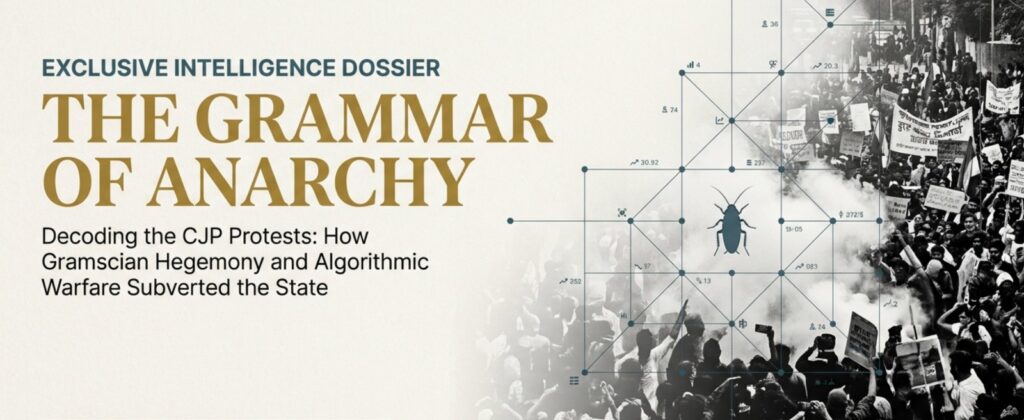
Cockroach’s Grammar and Cultural Hegemony
The Pulse of the Youth and the Dialogue of the State
Stepping past the mid-twentieth century and standing at this threshold of the twenty-first century, India today is positioned in an unprecedentedly advantageous demographic sweet spot. The pulse of the world’s largest youth force now beats in the veins of this country. This massive presence of the younger generation presents to the state apparatus both an infinite possibility and a profound test at the same time. Only by understanding the psychological canvas of this new generation can the political and social future of tomorrow’s India be discerned. Recently, in Mumbai, Dr. Mohan Bhagwat, the Sarsanghchalak of the Rashtriya Swayamsevak Sangh, participated in an engaging dialogue with the representatives of this young generation, namely Gen-Z and Gen-Alpha. A startling truth emerged from his assessment. He termed this generation as the “most honest and truthful” generation of India. According to him, the hearts of the young men and women of this generation harbor a deep, simple, and sincere yearning for patriotism and selfless service. They are no longer willing today to blindly accept any dogma or ancient custom; they require rational explanations and logical answers. And in their quest for these answers, they need boundless love and empathy.
In a democratic state system, Dr. Bhagwat has analyzed the anger of these youths and its expression with a highly distinct dimension. In his view, when formal dialogue or two-way discussion stalls in a democracy, organizing a movement on the streets can actually emerge as a valid means of protest or for building consensus. A movement is not an isolated matter; it is also a form of difficult dialogue. However, it is desirable for this protest to have a specific goal and language. Comparing the tradition of dialogue with India’s ancient philosophy of ‘Shastrartha’, the Sarsanghchalak reminds us that there exists no cheap ego of victory or defeat. In Shastrartha, there is ‘Purvapaksha’ (the opposing view) and ‘Uttarapaksha’ (the counter-argument), through whose joint churning the outline of the ultimate truth is unveiled. But when the simple emotion of this constructive protest is abused to sow the seeds of a well-planned political conspiracy, and when that movement leaves the formal constitutional path to step onto the path of anarchy, only then do the integrity of society and the state fall into a grave crisis.
The CJP movement that occurred in recent times—popularly known on net media as the ‘Cockroach Janta Party’—needs to be considered as an important ‘case study’ of India’s national security and political landscape. This was not a sudden outburst of student discontent, but was rather the result of a well-planned and long-term process. To understand the dynamics of this complex movement, it is essential to analyze its chronology, specific methodology, institutional support system, and, above all, its underlying ideological foundation.
From Cloud Crowd to Jantar Mantar
Looking at the chronology of the movement, clear evidence of its artificial structure is found. The movement was initiated by Abhijeet Dipke, residing in Canada. When CJP first stepped onto the digital stage, it achieved unprecedented social outreach within just two to three days. Encouraged by this initial virtual success, Dipke arrived in India on June 6 and initiated direct protests from June 7.
However, that massive online publicity did not align with the ground realities of India. Even though Dipke traveled from city to city across India from June 7 to June 19 attempting to build a mass movement, it ended in complete failure. Receiving no significant response, a permanent sit-in demonstration was started at Delhi’s Jantar Mantar from June 20. It is from this phase that a massive change was observed in the overall form, grandeur, and aesthetics of the movement.
How a vast organizational web was spread by leveraging a natural grievance of the students can be understood by reviewing the long list of entities that joined this movement. Seizing the opportunity of it being a youth and student movement, leftist student organizations ‘AISA’ (All India Students Association) and ‘SFI’ (Students’ Federation of India) came to the forefront of the stage and took entire logistics under their control. Immediately afterwards, international and national level organizations like ‘Amnesty International’, ‘Human Rights Watch’, and ‘PUCL’ (People’s Union for Civil Liberties) joined. They were accompanied by tribal organizations (like the All India Union of Forest Working People, BAPSA) and the All Tribal Assam Students’ Union. Radical feminist organizations like the National Federation of Indian Women, as well as religious-political platforms like the Students Islamic Organisation (SIO) and the Minority and Bahujan Right Forum, alongside elite Christian institutions like the United Christian Forum and the All India Catholic Union, gathered under the same umbrella. Press associations like the Editors Guild of India and Reporters Without Borders, and farmer organizations like the Samyukt Kisan Mocha and the Indian Trade Unions Council, also became part of this coalition.
The underlying methodology of consolidating this highly diverse and conflict-prone coalition into a single platform needs to be deeply understood. From the stage of Jantar Mantar, the demands for student rights gradually faded away, replaced by hardcore anti-Sanatan Dharma rhetoric and provocative slogans of dividing the nation. Left-wing ideologues weaponized the anxiety and mental agony of ordinary students to hijack the leadership of the movement, effectively turning an apolitical protest into a pure political weapon against the establishment.
Gramsci’s ‘War of Position’, ‘Cultural Hegemony’ and the Strategy of Alternative Politics
In the well-considered and extensive theoretical analysis of intellectual Atul Limaye, it becomes clear that the CJP movement was not merely a sudden outburst of student discontent. Behind it lay a highly complex chronology and a highly skillful methodology. Searching for the philosophical theory behind this struggle against the system brings us face to face with Italian Marxist theorist Antonio Gramsci’s theory of ‘Cultural Hegemony’. Gramsci was a militant activist and intellectual of the early twentieth century, whose political philosophy so terrified the then-ruler of Italy, Mussolini, that he was sentenced to life imprisonment. During his trial, the public prosecutor stood in court and declared, “We must stop this brain from functioning for twenty years.”
Sitting in the dark cell of prison, Gramsci analyzed why traditional Marxist revolutions failed in the advanced capitalist countries of Europe. He demonstrated that the ruling class does not rule merely through law-enforcing state apparatuses (Political Society) such as the police, army, or courts, but they rule through Civil Society, such as schools, churches, mass media, and universities. Through this mechanism, they establish a kind of cultural hegemony or dominance in society, which portrays their rule and exploitation as ‘common sense’ or naturally normal to the common people. Therefore, before embarking on a direct armed revolution or a ‘War of Manoeuvre’ to capture state power, it is necessary to conduct a long-term, patient ideological war or ‘War of Position’ (War of Position), which will crush this established, so-called bourgeois cultural hegemony from within.
The CJP protesters adopted precisely this Gramscian strategy, the theoretical term for which is ‘Alternative Politics’. The core foundation of this philosophy is “the subversion of democracy through democratic means”. Since capturing state power overnight by winning elections in a parliamentary democratic system is impossible for them, they employ the strategy of weaponizing the democratic rights of free speech and protest to render the pillars of the state machinery obsolete.
As part of this alternative politics, they apply ‘Deconstruction Theory’ to attempt to destroy the deep-seated faith permeating through society by labeling cultural role models like Shriramchandra—the soul of Indian heritage—as anti-women or anti-Dalit. During the protests, the testimonies of the police forces deployed on Delhi’s streets painted a highly alarming picture. The provocative attire, indecent gestures, and abusive slogans of the protesting young women made the extreme degradation of traditional Indian values crystal clear. In this process of breaking down the family structure, a front-line leader of the leftist movement, Neha Bora, proudly propagated that her father, despite being an Indian soldier, severed ties with her because she engages in leftist politics. Glorifying this kind of family breakdown and paternal defiance as heroism is actually a conscious strategy to isolate the youth from the protective shield of family and tradition.
According to intellectual Atul Limaye’s analysis, there is a perfect five-step model of this alternative politics:
Tactical Infiltration: Systematically infiltrating individuals with leftist ideologies into the judiciary, education, and administration, and introducing concepts like ‘Critical Theory’ in academic institutions and diversity indices in the corporate sector.
Demoralizing Institutions: Destroying public trust in key pillars like the Election Commission, the judiciary, and the police. Magnifying any minor administrative error on social media to build a well-planned ‘asymmetric narrative’.
War of Position (Narrative Warfare): Attacking traditional state integrity through literature, cinema, theater, and university syllabi.
Cultural Degradation: Normalizing lifestyles that break down traditional family structures.
Street Agitations: Creating continuous street agitations and anarchy as the final stage to paralyze the state.
Ambedkar’s ‘Grammar of Anarchy’ vs. CJP’s Duplicity
It is against this backdrop of crisis that the historical foresight and warnings of Dr. Babasaheb Ambedkar become extremely relevant today. On November 25, 1949, in his final address to the Constituent Assembly of India, Babasaheb issued three profound warnings for independent India. He stated in clear words that as long as constitutional and legal avenues remain open in the country, there can be no place on the streets for unconstitutional, violent protests such as civil disobedience, non-cooperation, or satyagraha. He characterized such extra-constitutional pathways in extremely harsh terms as the “Grammar of Anarchy” and warned that if this grammar is not abandoned, the palace of our hard-earned democracy is bound to be reduced to dust. He specifically warned against the inherent unconstitutional character of leftist and socialist forces, who use the shadow of the Constitution merely for their own self-interest and seek to tear down the constitutional framework from its roots at the first opportunity.
The greatest contradiction and hypocrisy of the CJP movement is that they decorated the Jantar Mantar protest site in Delhi with portraits of Dr. Ambedkar and made a dramatic attempt to prove their legal and moral legitimacy through public readings of the Preamble of the Constitution. Yet, in practice, we witnessed an aggressive application of Babasaheb’s ‘Grammar of Anarchy’ by them. The leadership of this movement had the audacity to stand publicly on the street and reject the interim ruling (Direction No. 4) of India’s highest constitutional court, the Supreme Court. They threatened that if the legal investigation against violent rioters was not halted, they would paralyze the streets once again. As leftist intellectual Yogendra Yadav had remarked, “The future of democracy will no longer be decided by Parliament, but by the streets; not by elections, but by resistance.” This is in effect a heinous declaration of war against India’s parliamentary democracy and the Constitution, which were the lifelong work of Babasaheb Ambedkar.
A Professional Plot Behind Spontaneity
Analyzing the data of the CJP movement, the mask of the so-called ‘spontaneous student movement’ falls away completely. Recent investigations and data analysis by Delhi Police prove that nearly 180 highly influential social media influencers and 3 highly professional PR agencies (among which ‘Barcode Entertainment’, recently raided by the police, is prominent) were active behind this movement. Millions of rupees were poured into this digital campaign to artificially make the grief and anger of students go viral. The Instagram platform was exploited to distribute intense mental excitement and emotion, which was subsequently transferred to the Twitter or ‘X’ platform as a pre-planned political weapon. Data shows that exactly 11 days after the peak of the movement was witnessed on Instagram, a political storm was raised on Twitter over it, proving that a well-designed and international-level digital strategy was operating behind the movement.
However, the darkest side of this movement is its elitism versus the extreme exploitation and deprivation of grassroots workers. Looking at the aristocratic lifestyle of the main face of the movement, Saurav Das, one’s eyes pop out. He resides in a luxurious rented house in Delhi’s ultra-elite Greater Kailash-1 area, the monthly rent of which runs into several lakh rupees! Yet, he has no specific or visible source of income. There is also a profound anomaly regarding the source of crores of rupees for the highly expensive studies of the movement’s founder, Abhijeet Dipke, in the United States, given that his retired father’s monthly government pension is extremely negligible. Promises of weekly sponsorship of over a lakh of rupees from external actors like US-based Osman Ali to keep the Jantar Mantar site active, and the conspiracy of dressing the extremist Hamim Mandal (arrested by the West Bengal State Police’s Special Task Force) in police uniform to execute sabotage in Delhi’s protest, make the international links of this movement crystal clear.
Yet, the selfless workers at the grassroots level of this movement became victims of extreme deception. In the words of Mohammad Junaid, a common mobile repair shop owner in Delhi, he spent all of his life’s savings of about 2.5 lakh rupees to supply food and water to the protesting students over an extended period. But on the day the political objective of the movement was accomplished and the Union Education Minister resigned, the elite leadership of CJP was so engrossed in their success party with alcohol and loud music in a luxurious five-star hotel in Delhi that they did not even have the time to pick up a single call from Junaid. Ultimately, these so-called revolutionary student leaders fled, leaving Junaid—who was burdened with heavy debts—completely alone to face the harsh interrogation of the police. In addition, in the violence of this “peaceful” protest, more than 200 police personnel were injured and a head constable was stabbed from behind, which was systematically hidden from the movement’s own narrative.
Equation of the Pathway
What is the way to protect the youth power of the country from this moral and social bankruptcy? In his dialogue in Mumbai, Sarsanghchalak Dr. Mohan Bhagwat has pointed out some highly specific and constructive paths. He specifically warned today’s Gen-Z generation about the invisible traps of social media algorithms. Today’s social media is creating extreme polarization and division in people’s minds. It generates an artificial ‘instant gratification’ or immediate satisfaction, pushing the younger generation into grave danger. Dr. Bhagwat reminded that instead of blindly imitating the aggressive ‘reel models’ of today’s social media, society should create healthy and constructive ‘role models’.
While delivering the true definition of leadership, he referred to a highly ancient and deep philosophy. A true leader is not someone who always wishes to remain in the spotlight. In the Sarsanghchalak’s words, “True leaders are those who remain behind. They work from within.” That is, a true leader always works from behind the scenes, discards his ego, and binds everyone together with the organization. He mentioned five traditional qualities of an ideal leader: the capacity to sacrifice (patre tyagi – sacrificing for the deserving), appreciating virtues (gune ragi – passionate about qualities), sharing achieved success and happiness with everyone (bhagi parijan – sharing with companions), acquiring right knowledge (shastra boddha – knowledgeable of scriptures), and uncompromising struggle against injustice (ran yoddha – warrior on the battlefield).
Be it in education or environmental conservation, if society is to be directed on a positive path, change must begin from one’s own home. Movements like the CJP seek to strike at the very roots of India’s Constitution and culture by misdirecting the honest and intense emotions of the younger generation. We must resolve this crisis through the very ‘Shastrartha’ or constructive dialogue proposed by Dr. Bhagwat. Tearing apart the toxic cultural web of Gramsci, we must build a positive, constructive, and state-centric consciousness. Let the tune of the youth’s song, instead of heading down the path of anarchy, resound like a sacred mantra in the holy sacrifice of nation-building—standing in today’s times, this is the only key to India’s progress.