
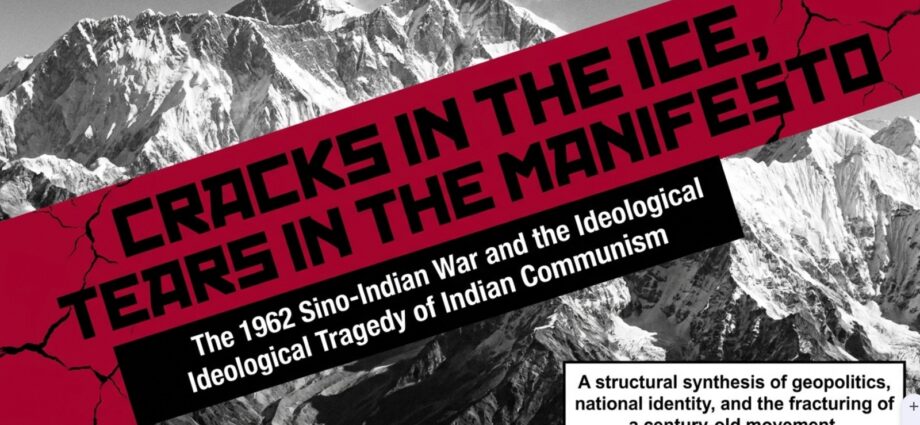
হিমালয়ের বরফে ফাটল ও লাল ইশতেহার: ১৯৬২-র যুদ্ধ, কমিউনিস্টদের দ্বিচারিতা ও মতাদর্শগত ট্র্যাজেডি
সীমান্তের যুদ্ধ ও স্বদেশের সীমানা
১৯৬২ সালের অক্টোবর মাসের শেষাশেষি যখন লাদাখের বরফাবৃত চূড়া আর নেফা-র (বর্তমান অরুণাচল প্রদেশ) গিরিখাতগুলি ভারতীয় জোয়ানদের রক্তে রঞ্জিত হচ্ছিল, ঠিক তখনই ভারতের রাজপথ থেকে শুরু করে রাজনীতির অন্দরমহলে এক অভূতপূর্ব এবং তীব্র লড়াইয়ের সূচনা হয়েছিল। সে লড়াই কেবল ভারত ও চীনের সীমানা রক্ষার যুদ্ধ ছিল না; তা ছিল ভারতীয় বামপন্থী আন্দোলনের আত্মপরিচিতি, দেশাত্মবোধের বিরুদ্ধে আন্তর্জাতিক দলীয় মতাদর্শের গভীরতম দ্বন্দ্বের এক নির্মম পরীক্ষা। হিমালয়ের উচ্চতায় যে যুদ্ধটি সামরিক বিপর্যয় হিসেবে ভারতের ইতিহাসে চিহ্নিত হয়ে আছে, সমতলে তা ভারতের অবিভক্ত কমিউনিস্ট পার্টিকে (CPI) এক চিরস্থায়ী ও অলঙ্ঘনীয় ফাটলের দিকে ঠেলে দিয়েছিল। শতাব্দী-প্রাচীন এই রাজনৈতিক দলটিকে মুখোমুখি দাঁড় করিয়ে দিয়েছিল এক জলন্ত প্রশ্নের—দেশপ্রেমের বড়, নাকি ‘সর্বহারা আন্তর্জাতিকতাবাদ’ (Proletarian Internationalism)? ১৯৬২ সালের চীন-ভারত সীমান্ত সংঘাতের সেই ক্রান্তিলগ্নে ভারতীয় কমিউনিস্টদের একটি বিরাট অংশের ভূমিকা ও তাঁদের বিতর্কিত প্রচারপত্রগুলি আজও স্বাধীন ভারতের রাজনৈতিক ইতিহাসের অন্যতম বিতর্কিত অধ্যায় হিসেবে পরিগণিত হয়।
মেকি আদর্শ বনাম ভূগোলের টানাপোড়েন: অবিভক্ত কমিউনিস্ট পার্টির ভাঙন
১৯৬২ সালের যুদ্ধটি হুট করে আসা কোনও সামরিক বিপর্যয় মাত্র ছিল না; এটি ছিল কয়েক দশক ধরে তিলে তিলে গড়ে ওঠা কমিউনিস্ট আন্দোলনের অভ্যন্তরীণ ফাটলের চূড়ান্ত ও বিস্ফোরক বহিঃপ্রকাশ। ১৯২০ সালে তাসখন্দে এবং পরবর্তীতে কানপুরে ভারতীয় কমিউনিস্ট পার্টির প্রতিষ্ঠার পর থেকেই দলটির অভ্যন্তরে সর্বদা একটি দ্বিমুখী সত্তার টানাপোড়েন ছিল। একদিকে ছিল ভারতের মাটিতে সংসদীয় গণতান্ত্রিক ব্যবস্থার মাধ্যমে সমাজতান্ত্রিক রূপান্তরের পক্ষপাতী নরমপন্থী ধারা; অন্যদিকে ছিল চীনের কৃষক আন্দোলনের আদলে সশস্ত্র বিপ্লবের স্বপক্ষে থাকা চরমপন্থী অংশ।
এই ফাটলটি প্রথম বড় ধাক্কা খায় ১৯৫৬ সালে সোভিয়েত কমিউনিস্ট পার্টির বিংশতিতম কংগ্রেসে ক্রুশ্চেভের ‘শান্তিপূর্ণ সহাবস্থান’ (Peaceful Coexistence) নীতি ঘোষণার পর। মাও জে দং-এর নেতৃত্বাধীন চীন একে ‘সংশোধনবাদ’ বলে আক্রমণ করে এবং বৈপ্লবিক উপায়ে ক্ষমতা দখলের ডাক দেয়। আন্তর্জাতিক স্তরে শুরু হওয়া এই ‘চীন-সোভিয়েত বিরোধ’ (Sino-Soviet Split) অতি দ্রুত ভারতীয় কমিউনিস্টদের ঘরের মধ্যেও প্রবেশ করে।
গবেষক মোহন রাম তাঁর অত্যন্ত প্রশংসিত আকর গ্রন্থ ‘ইন্ডিয়ান কমিউনিজম: স্প্লিট উইদিন এ স্প্লিট’ (Indian Communism: Split Within a Split, 1969)-এ বিশদ বিশ্লেষণ করেছেন কীভাবে ১৯৬২ সালের সীমান্ত যুদ্ধটি সি পি আই-এর ভেতরের আদর্শগত ফাটলকে এক অনিবার্য ও খণ্ডিত সাংগঠনিক ভাঙনের দিকে ধাবিত করেছিল। মোহন রাম তাঁর গবেষণায় দেখিয়েছেন যে, ১৯৬৪ সালের বিভাজন কেবল চীন ও সোভিয়েতের আন্তর্জাতিক দ্বন্দ্বের বাহ্যিক প্রতিফলন ছিল না, বরং তা ছিল ভারতীয় কমিউনিস্টদের ভেতর স্বদেশের জাতীয় নিরাপত্তা বনাম বিশ্ব সমাজতান্ত্রিক কেন্দ্রের মতাদর্শের টানাপোড়েনের এক গভীর পরিণতি। পশ্চিমবঙ্গের কমিউনিস্ট আন্দোলনের গতিপ্রকৃতি নিয়ে সমাজবিজ্ঞানী মার্কাস এফ. ফ্রান্ডা তাঁর বিখ্যাত গবেষণা গ্রন্থ ‘র্যাডিক্যাল পলিটিক্স ইন ওয়েস্ট বেঙ্গল’ (Radical Politics in West Bengal, 1971)-এ সবিস্তারে উল্লেখ করেছেন কীভাবে পশ্চিমবঙ্গের কমিউনিস্ট নেতৃত্বের একটি বড় অংশ প্রথম থেকেই মাও সে তুঙের বেইজিং লাইনের প্রতি আকর্ষিত হয়েছিল এবং দলের অভ্যন্তরে একটি চরমপন্থী বিপ্লবী ধারা গড়ে তুলতে চেয়েছিল।
১৯৬২ সালে যখন দুই দেশের সীমান্ত বিরোধ রক্তক্ষয়ী যুদ্ধে রূপ নেয়, তখন দলটির অভ্যন্তরে তিনটি ধারা স্পষ্ট হয়ে ওঠে: ১. রুশপন্থী গোষ্ঠী (Pro-Soviet Wing): শ্রীপাদ অমৃত ডাঙ্গে (S.A. Dange)-র নেতৃত্বে এই অংশটি জওহরলাল নেহরুর ভারত সরকারের প্রতিরক্ষা নীতিকে সমর্থন জানায় এবং চীনের এই পদক্ষেপকে নগ্ন ‘আগ্রাসন’ বলে চিহ্নিত করে। এই রুশপন্থী অংশের প্রবীণ নেতা শ্রীপাদ অমৃত ডাঙ্গে তাঁর তাত্ত্বিক পুস্তিকা ‘হোয়েন কমিউনিস্টস ডিফার’ (When Communists Differ, 1970)-এ অত্যন্ত কড়া ভাষায় চীনপন্থীদের মতাদর্শগত অবস্থানকে আক্রমণ করে লিখেছিলেন যে, উগ্রপন্থীদের এই চরম অবাস্তব বেইজিং-পন্থী অবস্থান ভারতের কমিউনিস্ট আন্দোলনকে দেশের বুকে এবং সাধারণ মানুষের সামনে চিরকালের জন্য চরম কালিমালিপ্ত করে দিল। ২. আন্তর্জাতিকতাবাদী ও চীনাপন্থী গোষ্ঠী (Internationalist/Pro-Chinese Wing): প্রমোদ দাশগুপ্ত, বি. টি. রণদিভে, পি. সুন্দরাইয়া ও জ্যোতি বসুর মতো নেতাদের নিয়ে গঠিত এই গোষ্ঠীটি চীনকে ‘আগ্রাসী’ বলতে স্পষ্ট অস্বীকার করে। তাঁদের যুক্তি ছিল অত্যন্ত সরল ও মতাদর্শগতভাবে কট্টর—একটি সমাজতান্ত্রিক রাষ্ট্র (চীন) কখনই চরিত্রগতভাবে ‘সাম্রাজ্যবাদী’ বা ‘সম্প্রসারণবাদী’ হতে পারে না। সুতরাং, দোষ চীনের নয়, বরং ভারতের ‘বুর্জোয়া’ শাসকদলেরই। তৎকালীন এই বঙ্গীয় কমিউনিস্ট আন্দোলনের অন্যতম প্রধান কাণ্ডারী জ্যোতি বসু তাঁর নিজের রাজনৈতিক আত্মজীবনী ‘স্মৃতিকথা’ (Memoirs: A Political Autobiography, 1997)-তে দমদম সেন্ট্রাল জেলে কাটানো দিনগুলির অভ্যন্তরীণ তীব্র মতপার্থক্য এবং কলম্বো প্রস্তাব নিয়ে দলের নেতাদের কামড়াকামড়ির এক করুণ জবানবন্দি দিয়েছেন। ৩. মধ্যপন্থী গোষ্ঠী (Centrist Wing): অজয় ঘোষের নেতৃত্বে এই অংশটি দুই পক্ষের তীব্র মতবিরোধকে চাপা দিয়ে দলের ঐক্য রক্ষা করার জন্য এক নিষ্ফল ও মরিয়া চেষ্টা চালিয়েছিল।
ভারত এবং চীনের তত্ত্বের দেশীয় সংস্করণ
এই বিতর্কের মূল কেন্দ্রে ছিল একটি বিশেষ রাজনৈতিক তত্ত্ব। চীনা কমিউনিস্ট পার্টির মুখপত্র ‘পিপলস ডেইলি’ (People’s Daily) এবং বেইজিং-এর রেডিও থেকে প্রতিনিয়ত প্রচার করা হচ্ছিল যে, জওহরলাল নেহরুর নেতৃত্বাধীন ভারতীয় সরকার আসলে ব্রিটিশ ঔপনিবেশিক শক্তির ‘সম্প্রসারণবাদী’ (Expansionist) উত্তরাধিকার বহন করছে। চীন দাবি করে, ‘ম্যাকমোহন লাইন’ (McMahon Line) হলো ব্রিটিশ সাম্রাজ্যবাদের এক অবৈধ চাপিয়ে দেওয়া সীমানা, যা চীন কখনই মেনে নেয়নি। নেহরু সরকার তাঁর ‘ফরোয়ার্ড পলিসি’ (Forward Policy)-র মাধ্যমে চীনা সীমান্তে সেনা ছাউনি তৈরি করে চীনকে উস্কে দিচ্ছে।
প্রখ্যাত সাংবাদিক নেভিল ম্যাক্সওয়েল তাঁর বহুল আলোচিত ও বিতর্কিত আকর গ্রন্থ ‘ইন্ডিয়াজ চায়না ওয়ার’ (India’s China War, 1970)-এ সবিস্তারে দেখিয়েছেন কীভাবে ভারতের এই ‘ফরোয়ার্ড পলিসি’ বা অগ্রবর্তী নীতি চীনের পক্ষ থেকে তীব্র সামরিক উস্কানি ও বুর্জোয়া শাসনযন্ত্রের আগ্রাসন হিসেবে দেখানো হয়েছিল। ম্যাক্সওয়েলের এই বিতর্কিত সম্প্রসারণবাদী ব্যাখ্যাকেই সে সময় ভারতের কট্টরপন্থী কমিউনিস্টরা তাঁদের প্রধান আদর্শগত ও তাত্ত্বিক হাতিয়ার হিসেবে গ্রহণ করেছিলেন।
চমকপ্রদভাবে, ভারতের অভ্যন্তরে কমিউনিস্টদের বামপন্থী বা চীনাপন্থী অংশটি বেইজিং-এর এই প্রচারযন্ত্রের ভাষা হুবহু দেশের মাটিতে অনুবাদ করতে শুরু করে। তৎকালীন গোয়েন্দা নথিপত্র এবং ঐতিহাসিক বিবরণী থেকে জানা যায়, এই অংশটি ভারতকে ‘শান্তিকামী’ এবং চীনকে ‘আগ্রাসী’ ভাবার জাতীয় ধারণাকে চ্যালেঞ্জ করে। চারু মজুমদারের মতো উগ্র চরমপন্থীরা (যিনি পরবর্তীতে নকশাল আন্দোলনের জন্ম দেন) সে সময় প্রকাশ্য রাস্তায় দাঁড়িয়ে নেহরু সরকারকে যুদ্ধের জন্য দায়ী করে স্লোগান দিয়েছিলেন।
এই চীনাপন্থী নেতারা একটি দ্বিমুখী তত্ত্ব বা ‘ক্লাস ক্যারেক্টার’ (Class Character) তত্ত্ব দাঁড় করিয়েছিলেন। ইতিহাসবিদ বিপান চন্দ্রের মতে, এই কট্টরপন্থী অংশটি চীনের সীমান্ত নীতির প্রকাশ্য সমালোচনা না করলেও, নেহরু সরকারকে ‘সর্বাত্মক সমর্থন’ দেওয়ার তীব্র বিরোধিতা করেছিল। তাঁদের দাবি ছিল, নেহরুর রাষ্ট্রযন্ত্র আসলে ‘বুর্জোয়া-জোতদার’ (bourgeois-landlord) শ্রেণী-স্বার্থ রক্ষা করছে। এই শাসক শ্রেণীটি নিজেদের দেশের অভ্যন্তরীণ অর্থনৈতিক সংকট ও ব্যর্থতা থেকে জনগণের নজর ঘোরাতে এবং প্রগতিশীল কমিউনিস্ট আন্দোলনকে দমন করতেই চীনের সঙ্গে এই যুদ্ধ বাধিয়েছে। ১৯৫৯ সালের ৩১ মার্চ কমিউনিস্টদের তিব্বত সংক্রান্ত বিতর্কিত বিবৃতিটি এই সন্দেহের আগুনে প্রথম ঘি ঢেলেছিল, যেখানে দলাই লামার আশ্রয় লাভ এবং তিব্বতের বিদ্রোহ দমন নিয়ে সি পি আই চীনের সুরেই সুর মিলিয়েছিল। তৎকালীন ভারতের প্রধানমন্ত্রী জওহরলাল নেহরুর ঐতিহাসিক বক্তৃতা সংকলন ‘Selected Works of Jawaharlal Nehru’ গ্রন্থে দেখা যায়, তিনি ১৯৫৯ সালের মে মাসে এক প্রেস কনফারেন্সে ক্ষোভ প্রকাশ করে সি পি আই-এর এই তিব্বত সংক্রান্ত প্রস্তাবকে বেইজিং-এর মুখপত্র ‘পিপলস ডেইলি’ পত্রিকার একটি ক্ষুদ্র সংক্ষিপ্তকরণ বা আক্ষরিক টুকলি বলে তীব্র বিদ্রুপ করেছিলেন।
তিব্বত সংকট (১৯৫৯): দলাই লামার আশ্রয় ও বেইজিং-এর প্রতি বাম-আনুগত্যের প্রথম মহড়া
১৯৬২ সালের যুদ্ধ শুরুর তিন বছর আগেই, ১৯৫৯ সালের তিব্বত সংকট এবং দলাই লামার ভারতে আশ্রয় গ্রহণের ঘটনাটি ভারতীয় কমিউনিস্টদের বেইজিং-ঘেঁষা ভাবমূর্তিকে প্রথম জনগণের সামনে উন্মোচিত করেছিল । ১৯৫০ সালে মাও জে দং-এর অধীনে পিপলস লিবারেশন আর্মি (PLA) তিব্বত অধিকার করার পর থেকেই সেখানে ক্ষোভের আগুন জ্বলছিল । ১৯৫৯ সালের ১০ মার্চ লাসায় এক ঐতিহাসিক তিব্বতি অভ্যুত্থান ঘটে । চীনা কামানের সামনে দাঁড়িয়ে প্রাণ বাঁচাতে ১৭ মার্চ দলাই লামা স্বদলবলে ভারতে পালিয়ে আসেন এবং নেহরু সরকার তাঁকে মানবিক ও রাজনৈতিক আশ্রয় প্রদান করে ।
এই ঘটনায় ভারতীয় সমাজ ও নেহরু মন্ত্রিসভায় চীনের প্রতি গভীর ক্ষোভ তৈরি হলেও, অবিভক্ত কমিউনিস্ট পার্টির প্রতিক্রিয়া ছিল সম্পূর্ণ বিপরীত। পার্টির তৎকালীন মুখপত্র ‘নিউ এজ’ (New Age)-এর ১৯৫৯ সালের মে সংখ্যার সম্পাদকীয় ও বিভিন্ন নিবন্ধে তিব্বতের এই গণঅভ্যুত্থানকে তিব্বতের “সামন্ততান্ত্রিক প্রতিক্রিয়াশীল শক্তি” এবং পশ্চিমা সাম্রাজ্যবাদীদের এক নোংরা ষড়যন্ত্র বলে অভিহিত করা হয় । বিশেষ করে ১৯৫৯ সালের মে ও সেপ্টেম্বর মাসে প্রকাশিত ‘নিউ এজ’ পত্রিকার একাধিক সংখ্যায় দলাই লামার আশ্রয় লাভকে ভারতের এক মারাত্মক কূটনৈতিক ভুল হিসেবে চিত্রিত করা হয়েছিল এবং দাবি করা হয়েছিল যে দলাই লামা মানবিক আশ্রয়ের সুযোগ নিয়ে ভারতে একটি ‘সমান্তরাল প্রবাসী সরকার’ পরিচালনা করছেন যা চীনের অভ্যন্তরীণ সার্বভৌমত্বে হস্তক্ষেপের সামিল। কমিউনিস্টরা দাবি করে যে, চীনা লাল ফৌজ তিব্বতকে মধ্যযুগীয় অন্ধকার থেকে উদ্ধার করে প্রগতির পথে নিয়ে যাচ্ছে, এবং দলাই লামার সমর্থকরা আসলে এক প্রতিক্রিয়াশীল গোষ্ঠী ।
শুধু তাই নয়, ‘নিউ এজ’-এর সেপ্টেম্বর ১৯৫৯ সংখ্যায় কমিউনিস্টরা দলাই লামাকে একজন ধর্মীয় শরণার্থী হিসেবে দেখতে অস্বীকার করে এবং অভিযোগ তোলে যে তিনি ভারতের মাটিকে ব্যবহার করে চীনের বিরুদ্ধে এক সমান্তরাল নির্বাসিত সরকার পরিচালনা করছেন ও ভারতীয় আশ্রয়ের অপব্যবহার করছেন । ভারতীয় বুদ্ধিজীবী ও সংবাদমাধ্যমের সহানুভূতিকে তাঁরা “চীনের অভ্যন্তরীণ বিষয়ে অবৈধ হস্তক্ষেপ” বলে আক্রমণ করেন ।
এই মনোভাবের ধারাবাহিকতা লক্ষ্য করা যায় সি পি আই (এম)-এর অন্যতম প্রধান কট্টরপন্থী প্রতিষ্ঠাতা বি. টি. রণদিভে-র পরবর্তীকালের লেখায় । তিনি স্পষ্ট দাবি করেছিলেন যে, তিব্বত চীনের সম্পূর্ণ নিজস্ব অভ্যন্তরীণ বিষয় ছিল এবং মাও-এর সরকার কর্তৃক সেই বিদ্রোহ দমন করা সম্পূর্ণ যুক্তিযুক্ত ছিল । রণদিভে অভিযোগ করেন যে, ভারত সরকার দলাই লামাকে “রাজকীয় সুবিধা” (royal facilities) দিয়ে চীনের বিরুদ্ধে উস্কানিমূলক প্রচারণার সুযোগ করে দিয়েছিল, যা ভারতের এক চরম ঐতিহাসিক ভুল । কমিউনিস্টদের এই প্রকাশ্য চীন-ঘেঁষা অবস্থান জওহরলাল নেহরুকে প্রচণ্ড ক্ষুব্ধ করেছিল । ১৯৫৯ সালের ১৪ মে এক সাংবাদিক সম্মেলনে নেহরু অত্যন্ত বিরক্তির সাথে মন্তব্য করেছিলেন যে, সি পি আই-এর প্রস্তাবগুলির ভাষা শুনলে মনে হয় যেন তা বেইজিং-এর ‘পিপলস ডেইলি’র সম্পাদকীয় পাতা থেকে হুবহু টুকলি করা হয়েছে ।
‘পঞ্চম বাহিনী’র ব্যাক-স্ট্যাব, রক্তাক্ত জওয়ানদের রক্তদান বয়কট
১৯৬২ সালের যুদ্ধ যখন চূড়ান্ত রূপ নেয় এবং নেফা ও লাদাখের বরফাবৃত গিরিখাতগুলিতে ভারতীয় সেনাবাহিনীর পিছু হটার খবর আসতে থাকে, তখন ভারতের রাজপথ থেকে শুরু করে রাজনীতির অন্দরমহলে জাতীয়তাবাদী আবেগের পারদ চড়তে থাকে। এই চরম জাতীয় বিপর্যয়ের মুহূর্তে ভারতীয় জোয়ানরা যখন হিমালয়ের গিরিপথে অকাতরে প্রাণ দিচ্ছিলেন, তখন কমিউনিস্টদের একাংশের ‘চীনাপন্থী’ বা ‘যুদ্ধবিরোধী’ অবস্থান সাধারণ মানুষের মনে তীব্র ক্ষোভ ও যন্ত্রণার জন্ম দেয় । আপামর ভারতবাসী এবং ভারত সরকার এই কট্টরপন্থী কমিউনিস্টদের আচরণকে দেশের পিঠে ‘পেছন থেকে ছুরি মারা’ (Backstabbing) এবং বেইজিং-এর হয়ে কাজ করা এক ‘পঞ্চম বাহিনী’ (Fifth Column) হিসেবেই সাব্যস্ত করে ।
এই চরম জাতীয়তাবাদী আবেগের মাঝে কমিউনিস্টদের তীব্র জাতীয়তাবিরোধী রূপটি সবচেয়ে মর্মান্তিকভাবে ফুটে উঠেছিল কেরলের এক অভূতপূর্ব ঘটনায়, যা ইতিহাসে ‘রক্তদান শিবিরের কুখ্যাত বিতর্ক’ নামে পরিচিত । যখন যুদ্ধের রণাঙ্গনে আহত ভারতীয় সৈন্যদের চিকিৎসার জন্য রক্তের তীব্র সংকট দেখা দেয়, তখন কেরলের প্রবীণ কমিউনিস্ট নেতা এবং পরবর্তীকালের মুখ্যমন্ত্রী ভি. এস. অচ্যুতানন্দনের নেতৃত্বে একটি দল জোয়ানদের রক্তদান করার জন্য রক্তদান শিবিরের প্রস্তাব দেন । কিন্তু দলটির কট্টরপন্থী চীনপন্থী অংশটি এই জাতীয়তাবাদী মনোভাবকে প্রচণ্ড ঘৃণার চোখে দেখে এবং রক্তদানের মতো মানবিক ও দেশপ্রেমমূলক কাজকে “দলবিরোধী কার্যকলাপ” (anti-party activity) বলে ঘোষণা করে । কেরলের কমিউনিস্ট আন্দোলনের এই বিতর্কিত অধ্যায়টি সমাজবিজ্ঞানী টি. জে. নসিটার তাঁর বিখ্যাত গ্রন্থ ‘কমিউনিজম ইন কেরালা: এ স্টাডি ইন পলিটিক্যাল অ্যাডাপ্টেশন’ (Communism in Kerala: A Study in Political Adaptation, 1982)-এ বিস্তারিতভাবে আলোচনা করেছেন। নসিটার দেখিয়েছেন কীভাবে প্রবীণ কমিউনিস্ট নেতা অচ্যুতানন্দনকে জোয়ানদের জন্য রক্তদানের সপক্ষে কথা বলার জন্য পলিটব্যুরো থেকে বহিষ্কৃত হতে হয়েছিল, যা দলের ভেতর বেইজিং-পন্থী তত্ত্বের উগ্রতম প্রভাব প্রমাণ করে। ভারতীয় সৈন্যের গায়ে জড়ানো তেরঙার চেয়ে বেইজিং-এর লাল পতাকার আদর্শিক বিশুদ্ধতাই যে এই কট্টর কমিউনিস্টদের কাছে অগ্রাধিকার পেয়েছিল, এই ঘটনাটি তারই এক নির্লজ্জ ঐতিহাসিক দলিল হয়ে রইল ।
সংসদের অলিন্দেও কমিউনিস্টদের ‘দেশদ্রোহ’ এবং ‘পঞ্চম বাহিনী’ হিসেবে সক্রিয়তা নিয়ে প্রচণ্ড ঝড় উঠেছিল । তৎকালীন স্বনামধন্য ক্রিকেটের ও রাজনীতিবিদ বিজয় আনন্দ (Vizzy) অত্যন্ত স্পষ্ট ভাষায় ক্ষোভ উগরে দিয়ে বলেছিলেন যে, যুদ্ধের সময় রাষ্ট্রের নিরাপত্তা বজায় রাখতে এই সাবোটাজকারী তথা পঞ্চম বাহিনীকে কঠোরভাবে দমন করা ব্যতিরেকে আর কোনও পথ খোলা নেই ।
এই পরিস্থিতিতে তৎকালীন স্বরাষ্ট্রমন্ত্রী লাল বাহাদুর শাস্ত্রীর নির্দেশে ভারত সরকার কঠোর পদক্ষেপ গ্রহণ করে । জারি করা হয় ‘ডিফেন্স অফ ইন্ডিয়া অ্যাক্ট, ১৯৬২’ (Defence of India Act, 1962) । এই আইনের আওতায় রাতারাতি সারা দেশ থেকে প্রায় এক হাজারেরও বেশি কমিউনিস্ট নেতা ও ক্যাডারকে ‘চীনের চর’ (Chinese Spies) এবং জাতীয় নিরাপত্তার জন্য বিপজ্জনক সাব্যস্ত করে বন্দি করা হয় । আটক নেতাদের তালিকায় ছিলেন জ্যোতি বসু, ই. এম. এস. নাম্বুদিরিপাদ, মুজফ্ফর আহমেদ, প্রমোদ দাশগুপ্ত এবং পি. সুন্দরাইয়ার মতো প্রথম সারির বাম নেতারা। জ্যোতি বসুকে তো সরাসরি ‘চীনের চর’ হিসেবেই কারারুদ্ধ করা হয়েছিল।
এই গ্রেফতারির ঘটনায় দলটির ভেতরের ফাটল আরও চওড়া হয় । রণাঙ্গনে ভারতীয় সেনাবাহিনীর এই শোচনীয় পরাজয় ও বিপর্যয় নিয়ে ব্রিগেডিয়ার জে. পি. ডালভি তাঁর সুবিখ্যাত স্মৃতিকথা ‘হিমালয়ান ব্লান্ডার’ (Himalayan Blunder, 1969)-এ তীব্র আক্ষেপ প্রকাশ করে লিখেছেন যে, ভারতীয় বাহিনীর এই চরম ট্র্যাজেডি কেবল সামরিক স্তরে সীমাবদ্ধ ছিল না, বরং তা ছিল দেশের রাজনৈতিক নেতৃত্বের এক চরম অদূরদর্শিতা—যার পূর্ণ সুযোগ নিয়েছিল চীনের কমিউনিস্ট প্রশাসন এবং দেশের অভ্যন্তরীণ চীনপন্থীরা। তৎকালীন ভারতীয় গোয়েন্দা প্রধান বি. এন. মল্লিক তাঁর রচিত ‘দ্য চাইনিজ বিট্রেয়াল: মাই ইয়ার্স উইথ নেহরু’ (The Chinese Betrayal: My Years with Nehru, 1971) গ্রন্থে সবিস্তারে নথিবদ্ধ করেছেন কীভাবে যুদ্ধকালীন সময়ে ভারতীয় গোয়েন্দা শাখা সি পি আই-এর ক্যাডার ও নেতাদের প্রতিটি গতিবিধির ওপর নজরদারি চালাচ্ছিল। মল্লিক দাবি করেছেন যে, চীনপন্থী কমিউনিস্টরা সরাসরি বেইজিং-এর নির্দেশিকায় কাজ করছিল, যা নেহরু সরকারকে ডিফেন্স অব ইন্ডিয়া অ্যাক্ট প্রয়োগ করতে বাধ্য করে। রাজনৈতিক গবেষক স্টিভেন এ. হফম্যান তাঁর ‘ইন্ডিয়া অ্যান্ড দ্য চায়না ক্রাইসিস’ (India and the China Crisis, 1990) গ্রন্থেও দেখিয়েছেন কীভাবে এই গ্রেফতারি অভিযান সি পি আই-এর বামপন্থীদের চিরতরে কোণঠাসা ও বিপ্লবী ভাবমূর্তির কঙ্কালসার সত্য প্রকাশিত করেছিল। বিশেষ করে হরকিষেণ সিং সুরজিতের কুখ্যাত আত্মগোপন পর্বটি ভারতীয় রাজনীতির এক চাঞ্চল্যকর অধ্যায় । গ্রেফতারি এড়াতে সুরজিৎ পাঞ্জাব ছেড়ে আন্ডারগ্রাউন্ডে চলে যান এবং সরকার তাঁকে ‘ফেরার অপরাধী’ বলে ঘোষণা করে । কিন্তু তিন সপ্তাহ পর, চীন একতরফা যুদ্ধবিরতি ঘোষণা করার পর সুরজিৎ দিল্লিতে এসে তৎকালীন স্বরাষ্ট্রমন্ত্রীর সাথে দেখা করে কমিউনিস্টদের আনুগত্যের প্রতিশ্রুতি দিতে বাধ্য হন। তবে ততক্ষণে কমিউনিস্টদের ‘চীনের চর’ বা ‘দেশদ্রোহী’ হিসেবে দেশবাসী চিনে গেছে।
বৈশ্বিক দর্পণে কমিউনিস্ট আন্তর্জাতিকতার চরম ব্যর্থতা
১৯৬২ সালের ভারতীয় কমিউনিস্টদের এই আদর্শগত সংকট কোনও একক বা বিচ্ছিন্ন ঘটনা ছিল না। এটি ছিল বিশ শতকের স্নায়ুযুদ্ধের যুগে বিশ্ব কমিউনিস্ট আন্দোলনের এক সাধারণ ও পুনরাবৃত্তিমূলক কাঠামোগত দুর্বলতা ও দ্বন্দ্বের প্রকাশ। যখনই কোনও দেশের জাতীয় সার্বভৌমত্বের স্বার্থের সাথে বহিরাগত সমাজতান্ত্রিক অক্ষের ভূরাজনৈতিক স্বার্থের সংঘাত বেধেছে, তখনই সেই সব দেশের স্থানীয় কমিউনিস্ট পার্টিগুলি নিজেদের স্বদেশের চেয়ে বিদেশী দলগত অভিভাবক রাষ্ট্রের স্বার্থকে অগ্রাধিকার দিয়ে ইতিহাসের কাঠগড়ায় দাঁড়িয়েছে। “ইন্টারন্যাশনাল প্যারালালস” নামক ঐতিহাসিক আকর সূত্র অনুসারে, বৈশ্বিক প্রেক্ষাপটে এর পাঁচটি অবিকল্প সমান্তরাল রূপ লক্ষ করা যায়:
১. কোরীয় যুদ্ধ (১৯৫০–১৯৫৩) — প্রথম স্নায়ুযুদ্ধ ও আনুগত্যের দ্বিমুখী সংকট
১৯৫০ থেকে ১৯৫৩ সালের কোরীয় যুদ্ধের সময় যখন চীন ও সোভিয়েত ইউনিয়ন সমর্থিত উত্তর কোরিয়া এবং মার্কিন যুক্তরাষ্ট্র সমর্থিত দক্ষিণ কোরিয়া রক্তক্ষয়ী দ্বন্দ্বে লিপ্ত ছিল, তখন আন্তর্জাতিক স্তরে সমাজতান্ত্রিক দলগুলি এক অগ্নিপরীক্ষার মুখোমুখি হয়। জাপানি আগ্রাসনের বিরুদ্ধে লড়াই করে জনভিত্তি পাওয়া উত্তর কোরিয়ার কমিউনিস্টরা তৎকালীন মস্কো ও বেইজিং-এর সবুজ সংকেত নিয়ে দেশ পুনরেকত্রীকরণের লক্ষ্যে দক্ষিণ কোরিয়া আক্রমণ করে।
এই যুদ্ধের ফলে পাশ্চাত্যের পুঁজিবাদী দেশগুলির স্থানীয় কমিউনিস্ট পার্টিগুলির সামনে এক বিশাল সংকট তৈরি হয় । তাঁদের নিজেদের দেশ যখন উত্তর কোরিয়াকে আক্রমণকারী হিসেবে চিহ্নিত করছিল, তখন এই কমিউনিস্ট দলগুলির পক্ষে স্বদেশের সার্বভৌম দৃষ্টিভঙ্গিকে মেনে নেওয়া বা সমাজতান্ত্রিক শিবিরের পক্ষে দাঁড়ানোর মধ্যে দ্বিমুখী টানাপোড়েন তৈরি হয়। ভারতের সি পি আই-এর চীনাপন্থী গোষ্ঠী যেভাবে ১৯৬২ সালে চীনের আগ্রাসনকে সমর্থন করেছিল, ঠিক তেমনই ১৯৫০-এর দশকে পশ্চিমা কমিউনিস্ট পার্টিগুলি উত্তর কোরিয়ার প্রকাশ্য সামরিক আগ্রাসনকে নিন্দা করতে ব্যর্থ হয়। এটি কমিউনিস্ট দলগুলির একটি চিরন্তন ব্যাধি—মতাদর্শগত আনুগত্যের কারণে স্বদেশের স্বার্থের ঊর্ধ্বে গিয়ে অপর একটি সমাজতান্ত্রিক রাষ্ট্রের আগ্রাসী পদক্ষেপকে নিঃশর্ত সমর্থন জোগানো।
২. ভিয়েতনামের দীর্ঘ সংঘাত (১৯৫৫–১৯৭৫) — ‘নৈতিক বারুদ’ ও দেশের নীতি বনাম লাল ইশতেহার
ভিয়েতনামের সুদীর্ঘ সংঘাতের সময় উত্তর ভিয়েতনামের কমিউনিস্ট বিপ্লবী ও দক্ষিণ ভিয়েতনামের মধ্যবর্তী গৃহযুদ্ধে চীন এবং সোভিয়েত ইউনিয়ন সরাসরি জড়িয়ে পড়ে। চীন এই লড়াইয়ে ভিয়েতনামী কমিউনিস্টদের বিপুল আর্থিক, সামরিক ও তাত্ত্বিক সমর্থন জুগিয়েছিল।
এই পর্বে ফ্রান্স, ইতালি এবং খোদ মার্কিন যুক্তরাষ্ট্রের স্থানীয় কমিউনিস্ট পার্টিগুলি স্ব স্ব দেশের সরকারের আনুষ্ঠানিক পররাষ্ট্র ও সামরিক নীতির সম্পূর্ণ বিপরীত মেরুতে গিয়ে অবস্থান নেয়। ফরাসি কমিউনিস্ট পার্টি (PCF) এবং ইতালীয় কমিউনিস্ট পার্টি (PCI) দৃঢ়ভাবে উত্তর ভিয়েতনামের হ্যানয় প্রশাসনের পক্ষে সওয়াল করে এবং নিজেদের দেশের সরকারকে ‘সাম্রাজ্যবাদী’ বলে আক্রমণ করতে থাকে। এর ফলে এই দলগুলি নিজ দেশে ‘দেশদ্রোহী’ বা ‘রাষ্ট্রবিরোধী’ কার্যকলাপে সামিল হয়, যা ১৯৬২ সালে ভারতের মাটিতে প্রমোদ দাশগুপ্ত বা জ্যোতি বসুদের ক্ষেত্রে অবিকলভাবে ঘটেছিল। এই দলগুলির বিরুদ্ধে অভিযোগ ছিল যে, তারা যুদ্ধ চলাকালীন শত্রু রাষ্ট্রকে ‘নৈতিক বারুদ’ (moral ammunition) এবং রাজনৈতিক আড়াল প্রদান করছে। শত্রু দেশের প্রচারণা বা যুদ্ধচেষ্টাকে আড়াল করার এই সাংগঠনিক মডেলটি বৈশ্বিক বামপন্থার ইতিহাসে হুবহু এক।
৩. উত্তর কোরিয়া ও চীন-সোভিয়েত বিরোধ — দুই প্রভুর মাঝে ভারসাম্য রক্ষা
স্নায়ুযুদ্ধের সমীকরণে উত্তর কোরিয়ার ‘কোরিয়ান ওয়ার্কার্স পার্টি’ (KWP) এক জটিল সংকটে পড়ে, যখন ১৯৬০-এর দশকে চীন-সোভিয়েত আদর্শগত বিরোধ (Sino-Soviet Split) তীব্র হয়ে ওঠে। দুই মহাশক্তিধর সমাজতান্ত্রিক দলীয় অভিভাবক দেশের দ্বন্দ্বের মাঝে পড়ে উত্তর কোরিয়ার শাসক কিম ইল সুং এক অভূতপূর্ব ভারসাম্য নীতি গ্রহণ করেছিলেন। তিনি বিশ্ব সমাজতান্ত্রিক শিবিরের ঐক্য রক্ষা এবং আমেরিকার সাম্রাজ্যবাদের বিরুদ্ধে মূল আঘাত হানার ওপর জোর দেন, যাতে মস্কো বা বেইজিং—কারও সাথেই সরাসরি বৈরিতা তৈরি না হয়।
উত্তর কোরিয়ার এই ভারসাম্যবাদী ও দ্বিমুখী নীতি অবিকল প্রতিফলিত হয়েছিল ১৯৬২ সালের ভারত-চীন যুদ্ধের সময় ভারতের কমিউনিস্ট পার্টির তৎকালীন সাধারণ সম্পাদক অজয় ঘোষের ‘মধ্যপন্থী’ (Centrist) ভূমিকার মধ্যে। অজয় ঘোষ যেভাবে সোভিয়েতপন্থী ডাঙ্গে গোষ্ঠী এবং বেইজিংপন্থী চরমপন্থীদের তীব্র কামড়াকামড়ির মাঝে দাঁড়িয়ে দলের ঐক্য রক্ষা করার নিষ্ফল চেষ্টা করেছিলেন, কিম ইল সুং-এর কিংকর্তব্যবিমূঢ় অবস্থাও ছিল ঠিক তাই। মস্কো ও বেইজিং-এর রেষারেষির মাঝে পিষ্ট হয়ে যাওয়া স্থানীয় কমিউনিস্ট নেতৃত্বের এই অসহায়তা আন্তর্জাতিক সমাজতান্ত্রিক রাজনীতির এক ঐতিহাসিক বাস্তব।
৪. চীন-ভিয়েতনামের তথাকথিত সৌভ্রাতৃত্বের অবসান ও ১৯৭৯ সালের যুদ্ধ
১৯৩০ সালে কমিন্টার্নের প্রতিনিধি হিসেবে হো চি মিন ভিয়েতনামের কমিউনিস্ট পার্টি গড়ে তোলার পর থেকেই চীনের কমিউনিস্ট পার্টির (CPC) সাথে ভিয়েতনামের সমাজতান্ত্রিক বিপ্লবীদের এক ঐতিহাসিক ও নিবিড় আত্মিক সৌভ্রাতৃত্ব গড়ে উঠেছিল। ১৯৩৮ সালে হো চি মিন ইয়েনান-এ গিয়ে মাও জে দং-এর দলের সাথে সরাসরি মৈত্রীর সম্পর্ক স্থাপন করেন। কিন্তু এই গভীর তত্ত্বগত ভ্রাতৃত্বের সম্পর্কও টিকতে পারেনি এবং ১৯৭৯ সালে চীন নিজেই ভিয়েতনামের মাটিতে রক্তক্ষয়ী আক্রমণ চালায়।
১৯৭৯ সালের এই চীন-ভিয়েতনামের সংঘাত ভারতের ইতিহাসের এক বড় নৈতিক সত্যকে উন্মোচিত করে। ১৯৬২ সালে সি পি আই-এর চীনাপন্থী বা উগ্রপন্থীরা যে দাবি করেছিলেন—একটি সমাজতান্ত্রিক রাষ্ট্র কখনও আগ্রাসী হতে পারে না—তা ১৯৭৯ সালের যুদ্ধের মাধ্যমে সম্পূর্ণ মিথ্যা প্রমাণিত হয়। এটি আসলে ১৯৬২ সালে সি পি আই-এর রুশপন্থী গোষ্ঠীর সতর্কবার্তাকেই ঐতিহাসিকভাবে সঠিক বলে প্রমাণ করে। রুশপন্থীরা যেভাবে দাবি করেছিলেন যে সমাজতান্ত্রিক দেশগুলির মধ্যেও জাতীয় স্বার্থই প্রধান এবং আদর্শবাদী তত্ত্বের মোড়কে বেইজিং-এর ওপর অন্ধ নির্ভরতা আত্মঘাতী, ১৯৭৯ সালের চীন-ভিয়েতনামের রক্তক্ষয়ী লড়াই তারই এক অমোঘ প্রমাণ।
৫. ১৯৬৯ সালের আন্তর্জাতিক সম্মেলন — খণ্ডিত কমিউনিস্ট ঐক্যের চিরস্থায়ী কফিন
১৯৬৯ সালে মস্কোয় অনুষ্ঠিত ‘কমিউনিস্ট ও ওয়ার্কার্স পার্টিসমূহের আন্তর্জাতিক সম্মেলন’ (International Meeting of Communist and Workers Parties)-এ বিশ্ব কমিউনিস্ট আন্দোলনের ভাঙন সম্পূর্ণভাবে স্পষ্ট হয়ে ওঠে। চীন-সোভিয়েত দ্বন্দ্বে কোনও নির্দিষ্ট পক্ষ নিতে অস্বীকার করে উত্তর কোরিয়া এবং ভিয়েতনামের মতো কমিউনিস্ট দলগুলি এই ঐতিহাসিক সম্মেলন বয়কট করে অনুপস্থিত থাকে।
১৯৬৯ সালের এই আন্তর্জাতিক অনুপস্থিতি ও সম্মেলন বিশ্বব্যাপী কমিউনিস্ট ঐক্যের সাজানো কফিনটিকে চিরতরে পেরেক ঠুকে বন্ধ করে দিয়েছিল। বৈশ্বিক স্তরে সমাজতান্ত্রিক আন্দোলনের এই যে টুকরো টুকরো হয়ে যাওয়া এবং সংহতির বিনাশ, তারই এক ক্ষুদ্রতর ও রক্তাক্ত দেশীয় সংস্করণ ছিল ১৯৬৪ সালের ভারতের সি পি আই-এর ঐতিহাসিক ভাঙন, যা মূলত ১৯৬২ সালের যুদ্ধের ছাই থেকেই জন্ম নিয়েছিল।
এক ঐতিহাসিক শিক্ষা: মতাদর্শ বনাম জাতীয় অস্তিত্ব
১৯৬৪ সালের ৭ নভেম্বর ভারতের অবিভক্ত কমিউনিস্ট পার্টি অবশেষে আনুষ্ঠানিকভাবে ভেঙে দুই টুকরো হয়ে যায়—ভারতের কমিউনিস্ট পার্টি (CPI) এবং ভারতের কমিউনিস্ট পার্টি (মার্ক্সবাদী) বা CPI(M)। এই ভাঙনের মূল অনুঘটক হিসেবে কাজ করেছিল ১৯৬২-র যুদ্ধ এবং তার ফলে সৃষ্ট আন্তর্জাতিকতাবাদের বিরোধ।
কিন্তু ইতিহাসের চাকা এখানেই থেমে থাকেনি। যে চীনপন্থী বামেরা ১৯৬২ সালে দাবি করেছিলেন যে ‘সমাজতান্ত্রিক রাষ্ট্র কখনই আগ্রাসী হতে পারে না’, তাঁদের সেই ধ্রুব সত্যকে ধূলিসাৎ করে দিয়ে ১৯৭৯ সালে চীন নিজেই ভিয়েতনাম আক্রমণ করে বসে। বেইজিং-এর তৎকালীন নেতা ডেং জিয়াওপিং স্বয়ং ভিয়েতনামের কম্বোডিয়া দখলকে ‘সম্প্রসারণবাদ’ বলে কটাক্ষ করেন। এই ঘটনাটি ভারতীয় কমিউনিস্টদের সেই পুরনো ‘আদর্শগত মুখোশ’ সম্পূর্ণ খুলে দিয়েছিল। প্রমাণ করেছিল যে, কমিউনিস্ট রাষ্ট্রগুলির মধ্যেও আগ্রাসন স্বার্থই শেষ কথা এবং আদর্শবাদ সেখানে কেবল একটি সাজানো বুলি মাত্র।
১৯৬২-র যুদ্ধ ভারতীয় কমিউনিস্ট আন্দোলনের কপালে যে কালিমা লেপে দিয়েছিল, তা পরবর্তীকালে জ্যোতি বসু বা নাম্বুদিরিপাদদের কয়েক দশকের নির্বাচনী সাফল্যের আড়ালে ঢাকা পড়ে গেলেও, ভারতের জাতীয় নিরাপত্তা ও জাতীয়তাবাদী রাজনীতির অলিন্দে তা চিরকালের মতো এক বড় প্রশ্নচিহ্ন হয়ে রয়ে গেল। পরবর্তীকালে ১৯৭৬ সালের ৬ আগস্ট ভারতের মার্কিন দূতাবাস থেকে প্রেরিত একটি অত্যন্ত গোপন কূটনৈতিক তারবার্তা, যা উইকিলিকস (WikiLeaks) দ্বারা প্রকাশিত হয়েছে, সেখানে প্রকাশ পায় যে পশ্চিমবঙ্গের তৎকালীন প্রবীণ সি পি আই (এম) নেতা জ্যোতি বসু বেইজিং-এর প্রতি তাঁর চরম বিরক্তি প্রকাশ করে আমেরিকান কূটনীতিকদের কাছে স্বীকার করেছিলেন যে, চীনের কমিউনিস্টরা আসলে পৃথিবীর সবচেয়ে কঠিন ও সুবিধাবাদী মানুষ।
বিশদ গ্রন্থপঞ্জী ও আকর গ্রন্থ বিবরণী:
নিচে এই নিবন্ধে ব্যবহৃত সমস্ত ঐতিহাসিক তথ্য, সামরিক বিবরণী, কমিউনিস্ট দলিলপত্র এবং আন্তর্জাতিক তুলনামূলক বিশ্লেষণের জন্য একটি সুনির্দিষ্ট গ্রন্থ তালিকা প্রদান করা হলো:
ক. চীন-ভারত সীমান্ত বিবাদ ও ১৯৬২ সালের যুদ্ধ বিষয়ক (Sino-Indian War Context)
১. Maxwell, Neville. India’s China War. New York: Pantheon Books, 1970.
টীকা: জওহরলাল নেহরুর ‘ফরোয়ার্ড পলিসি’-র তীব্র সমালোচনামূলক এই বইটি কমিউনিস্টদের বামপন্থী অংশের ‘ভারতীয় সম্প্রসারণবাদ’ তত্ত্বের একাডেমিক ভিত্তি হিসেবে পরিচিত। ২. Dalvi, Brigadier J.P. Himalayan Blunder: The Curtain-Raiser to the Sino-Indian War of 1962. Bombay: Thacker & Co., 1969.
টীকা: ১৯৬২-র যুদ্ধের সামরিক এবং রাজনৈতিক ব্যর্থতার অন্যতম প্রধান প্রত্যক্ষদর্শী বিবরণ। ৩. Hoffmann, Steven A. India and the China Crisis. Berkeley: University of California Press, 1990.
টীকা: যুদ্ধের সময়ে ভারতের অভ্যন্তরে সৃষ্ট রাজনৈতিক প্রতিক্রিয়া এবং কমিউনিস্টদের গ্রেফতারির ওপর অত্যন্ত নির্ভরযোগ্য গবেষণা গ্রন্থ। ৪. Das Gupta, Amit R., and Lorenz M. Lüthi (eds.). The Sino-Indian War of 1962: New Perspectives. London: Routledge, 2017.
টীকা: ভারত-চীন যুদ্ধের অভ্যন্তরীণ রাজনৈতিক প্রভাব, বিশেষ করে কমিউনিস্টদের দমনপীড়নের ওপর নতুন নথিপত্রের ভিত্তিতে রচিত প্রবন্ধের সংকলন।
খ. ভারতীয় কমিউনিস্ট আন্দোলন ও ১৯৬৪-র বিভাজন বিষয়ক (Indian Communism & The Split)
৫. Ram, Mohan. Indian Communism: Split Within a Split. New Delhi: Vikas Publishing House, 1969.
টীকা: ১৯৬২-র যুদ্ধের প্রেক্ষাপটে সি পি আই-এর অভ্যন্তরে সৃষ্টি হওয়া ফাটল এবং ১৯৬৪ সালের বিভাজনের অত্যন্ত নিখুঁত রাজনৈতিক ও সাংগঠনিক বিশ্লেষণ। ৬. Overstreet, Gene D., and Marshall Windmiller. Communism in India. Berkeley: University of California Press, 1959.
টীকা: অবিভক্ত কমিউনিস্ট পার্টির প্রাথমিক গঠন, আন্তর্জাতিক যোগাযোগ ও আদর্শগত দ্বিচারিতার ওপর একটি ধ্রুপদী আকাদেমিক কাজ। ৭. Basu, Jyoti. Memoirs: A Political Autobiography. Calcutta: National Book Agency, 1997.
টীকা: ১৯৬২-র সময় দমদম জেলে বন্দি থাকার দিনগুলিতে বামপন্থীদের অভ্যন্তরীণ কোন্দল এবং কলম্বো প্রস্তাব সংক্রান্ত বিতর্কের ওপর জ্যোতি বসুর নিজস্ব জবানবন্দি। ৮. Chandra, Bipan, et al. India After Independence: 1947-2000. New Delhi: Penguin Books India, 1999.
টীকা: নেহরুর শ্রেণীচরিত্র সংক্রান্ত কট্টরপন্থী কমিউনিস্টদের আপত্তির বিষয়ে বিপিন চন্দ্রের গুরুত্বপূর্ণ বিশ্লেষণ সম্বলিত গ্রন্থ।
গ. আন্তর্জাতিক কমিউনিস্ট আন্দোলন ও স্নায়ুযুদ্ধ বিষয়ক (International Communism & Cold War)
৯. Lüthi, Lorenz M. The Sino-Soviet Split: Cold War in the Communist World. Princeton: Princeton University Press, 2008.
টীকা: চীন ও সোভিয়েত ইউনিয়নের আদর্শগত বিরোধের বিশ্বব্যাপী প্রভাব এবং কীভাবে তা ভারতের মতো স্থানীয় কমিউনিস্ট পার্টিকে ধ্বংস করেছিল, তার নিখুঁত বিবরণ। ১০. Ricklefs, M.C. A History of Modern Indonesia since c. 1200. Stanford: Stanford University Press, 2001.
টীকা: ইন্দোনেশিয়ার কমিউনিস্ট পার্টি (PKI)-র বেইজিং লাইনের প্রতি অন্ধ আনুগত্য এবং তার ফলে ১৯৬৫ সালের গণহত্যার ঐতিহাসিক বিবরণ। ১১. Judt, Tony. Past Imperfect: French Intellectuals, 1944-1956. Berkeley: University of California Press, 1992.
টীকা: ১৯৫৬-র হাঙ্গেরি সংকটে ফরাসি কমিউনিস্ট পার্টির সোভিয়েত পক্ষ নেওয়ার ট্র্যাজেডি এবং বুদ্ধিজীবীদের মোহভঙ্গের ইতিহাস।
Fissures in the Himalayan Snow and the Red Manifesto: The 1962 War, Communist Duplicity, and Ideological Tragedy
Section 1: The Border War and the Nation’s Frontiers
Toward the end of October 1962, when the snow-capped peaks of Ladakh and the gorges of NEFA (now Arunachal Pradesh) were stained with the blood of Indian jawans, an unprecedented and intense battle erupted from the streets of India to the corridors of political power. That battle was not merely about defending the borders of India and China; it was a brutal test of the Indian leftist movement’s self-identity, a clash between patriotism and international party ideology.
While the war in the Himalayas was marked as a military disaster in Indian history, on the plains, it drove the undivided Communist Party of India (CPI) toward a permanent and insurmountable split. It stood this century-old political party face-to-face with a burning question: is patriotism supreme, or “proletarian internationalism”? The role of a vast section of Indian communists and their controversial pamphlets during that critical juncture of the 1962 Sino-Indian border conflict is still considered one of the most controversial chapters in the political history of independent India.
Section 2: Ideology versus Geography — The Split of the Undivided Communist Party
The 1962 war was not a sudden military disaster; it was the explosive culmination of internal fissures that had been building within the communist movement over several decades. Since the founding of the Communist Party of India in Tashkent in 1920 and later in Kanpur, there was a constant tension between two opposing identities within the party. On one hand, there was a moderate wing that favored a socialist transition through parliamentary democratic systems on Indian soil; on the other hand, there was an extremist faction that advocated armed revolution on the model of the Chinese peasant movement.
This split received its first major blow in 1956 after Nikita Khrushchev’s declaration of the policy of “Peaceful Coexistence” at the Twentieth Congress of the Communist Party of the Soviet Union. China, under the leadership of Mao Zedong, attacked this as “revisionism” and called for a revolutionary seizure of power. This “Sino-Soviet Split” that began at the international level rapidly entered the homes of Indian communists.
Researcher Mohan Ram, in his highly acclaimed reference book Indian Communism: Split Within a Split (1969), analyzed in detail how the 1962 border war drove the CPI’s internal ideological fissure toward an inevitable and fragmented organizational split. Mohan Ram’s research showed that the 1964 split was not merely an external reflection of the international Sino-Soviet dispute, but a profound consequence of the tension within Indian communists between the nation’s national security and the ideology of the global socialist center.
Regarding the trajectory of the West Bengal communist movement, sociologist Marcus F. Franda, in his famous research book Radical Politics in West Bengal (1971), detailed how a major portion of West Bengal’s communist leadership was from the beginning attracted to Mao Zedong’s Beijing line and sought to build an extremist revolutionary faction within the party.
In 1962, when the border dispute between the two countries escalated into a bloody war, three distinct factions emerged within the undivided party:
The Pro-Soviet Wing: Under the leadership of Shripad Amrit Dange (S.A. Dange), this faction supported Prime Minister Jawaharlal Nehru’s government’s defense policy and labeled China’s move as naked “aggression.” S.A. Dange, in his theoretical booklet When Communists Differ (1970), attacked the ideological stance of the pro-China faction in very harsh language, writing that this extremely unrealistic Beijing-oriented position of the extremists permanently tarnished the communist movement in the heart of India and in front of the general public.
The Internationalist / Pro-Chinese Wing: Composed of leaders like Promode Dasgupta, B.T. Ranadive, P. Sundarayya, and Jyoti Basu, this group flatly refused to call China an “aggressor.” Their reasoning was simple and ideologically dogmatic: a socialist state (China) can never by character be “imperialist” or “expansionist.” Therefore, the fault lay not with China, but with India’s “bourgeois” ruling party. Jyoti Basu, one of the main leaders of this Bengal-based communist movement, in his political autobiography Memoirs: A Political Autobiography (1997), gave a pathetic deposition of the intense internal disagreements during the days spent in Dum Dum Central Jail and the fierce infighting among party leaders over the Colombo Proposals.
The Centrist Wing: Under the leadership of Ajoy Ghosh, this faction made a futile and desperate attempt to paper over the intense disagreements between the two sides and preserve the unity of the party.
Section 3: The Domestic Version of Sino-Indian Theories
At the core of this debate was a specific political theory. The Chinese Communist Party’s mouthpiece, the People’s Daily, and Beijing Radio were constantly propagating that the Indian government led by Jawaharlal Nehru was carrying forward the “expansionist” legacy of British colonial power. China claimed that the “McMahon Line” was an illegal boundary imposed by British imperialism, which China never accepted. It claimed the Nehru government, through its “Forward Policy,” was provoking China by setting up military outposts on the Chinese border.
Famous journalist Neville Maxwell, in his widely discussed and controversial reference book India’s China War (1970), detailed how India’s “Forward Policy” was portrayed from the Chinese side as a severe military provocation and aggression of the bourgeois state apparatus. The extremist communists in India adopted Maxwell’s controversial expansionist explanation as their primary ideological and theoretical weapon.
Incredibly, the leftist or pro-Chinese faction of the communists within India began translating the language of this Beijing propaganda machine verbatim on home soil. Intelligence reports and historical records of the time reveal that this faction challenged the national perception of India as “peace-loving” and China as “aggressive.” Extremists like Charu Majumdar (who later founded the Naxalite movement) stood on the public streets at that time shouting slogans blaming the Nehru government for the war.
These pro-Chinese leaders established a double theory or “Class Character” theory. According to historian Bipan Chandra, although this hardline faction did not publicly criticize China’s border policy, it strongly opposed giving “absolute support” to the Nehru government. Their claim was that Nehru’s state machinery actually protected the interests of the “bourgeois-landlord” class. This ruling class had instigated this war with China to distract the public’s attention from internal economic crises and failures and to suppress the progressive communist movement.
The controversial statement of the communists regarding Tibet on March 31, 1959, had first poured fuel on the fire of this suspicion, where the CPI had echoed China’s stance regarding the granting of asylum to the Dalai Lama and the suppression of the Tibetan uprising. In the compilation of historical speeches of the then Prime Minister of India, Selected Works of Jawaharlal Nehru, it is seen that during a press conference in May 1959, he expressed resentment and sharply mocked the CPI’s resolution on Tibet, calling it a brief summary or a literal copy of an editorial page from Beijing’s mouthpiece, the People’s Daily.
Section 4: The Tibet Crisis (1959) — Dalai Lama’s Asylum and the First Rehearsal of Leftist Loyalty to Beijing
Three years before the outbreak of the 1962 war, the Tibet crisis of 1959 and the granting of asylum to the Dalai Lama in India first exposed the Beijing-leaning image of the Indian communists to the general public. Since the occupation of Tibet by the People’s Liberation Army (PLA) under Mao Zedong in 1950, the fires of resentment had been burning there. On March 10, 1959, a historic Tibetan uprising occurred in Lhasa. To save his life from Chinese cannons, the Dalai Lama fled to India with his entourage on March 17, and the Nehru government granted him humanitarian and political asylum.
Although this incident created deep resentment against China in Indian society and the Nehru cabinet, the reaction of the undivided Communist Party was entirely opposite. The then mouthpiece of the party, New Age, in its editorial and various articles in the May 1959 issue, termed this mass uprising in Tibet as a dirty conspiracy of Tibet’s “feudal reactionary forces” and Western imperialists.
Specifically, in several issues of New Age published in May and September 1959, the granting of asylum to the Dalai Lama was portrayed as a grave diplomatic mistake for India, claiming that the Dalai Lama was taking advantage of humanitarian asylum to run a “parallel government-in-exile” in India, which amounted to interference in China’s internal sovereignty. The communists claimed that the Chinese Red Army rescued Tibet from medieval darkness and was leading it on the path of progress, and that the Dalai Lama’s supporters were actually a reactionary group.
Furthermore, in the September 1959 issue of New Age, the communists refused to view the Dalai Lama as a religious refugee and alleged that he was using Indian soil to run a parallel exiled government against China and abusing Indian asylum. They attacked the sympathy of Indian intellectuals and the media as “illegal interference in China’s internal affairs.”
This consistency of attitude is observed in the subsequent writings of B.T. Ranadive, one of the main hardline founders of the CPI(M). He explicitly claimed that Tibet was entirely China’s own internal matter and that the suppression of that rebellion by Mao’s government was completely justified. Ranadive alleged that the Indian government, by providing “royal facilities” to the Dalai Lama, had given him the opportunity for provocative propaganda against China, which was a grave historical mistake on India’s part.
This open pro-China stance of the communists had made Prime Minister Jawaharlal Nehru extremely angry. In a press conference on May 14, 1959, Nehru remarked with great annoyance that listening to the language of the CPI’s resolutions made it feel as if they were copied verbatim from the editorial page of Beijing’s People’s Daily.
Section 5: The ‘Fifth Column’ Back-Stab and the Boycott of Blood Donation for Bleeding Jawans
When the 1962 war reached its climax and news of the Indian Army’s retreat in the snow-capped gorges of NEFA and Ladakh began to arrive, the pitch of patriotic fervor from the streets of India to the corridors of political power rose to a fever pitch. In this moment of extreme national disaster, when Indian jawans were selflessly giving their lives in the Himalayan passes, the “pro-Chinese” or “anti-war” position held by a section of the communists sparked intense anger and grief in the hearts of ordinary people. The general public and the Government of India viewed the behavior of these hardline communists as “backstabbing” the nation and acting as a “Fifth Column” working on behalf of Beijing.
Amid this extreme nationalistic fervor, the intensely anti-national face of the communists was most tragically manifested in an unprecedented event in Kerala, known in history as the “infamous blood donation camp controversy.” When an acute shortage of blood arose for the treatment of injured Indian soldiers on the battlefield, a group under the leadership of veteran Kerala communist leader and future Chief Minister V.S. Achuthanandan proposed establishing blood donation camps to donate blood for the jawans.
However, the hardline pro-China faction of the party viewed this patriotic attitude with great hatred and declared the humanitarian and patriotic act of donating blood as “anti-party activity.” For this offense, Achuthanandan was temporarily suspended or removed from the party’s Politburo. This event remains a shameless historical document proving that the ideological purity of Beijing’s red flag was a greater priority for these hardline communists than the tricolor wrapped around the bodies of Indian soldiers.
Sociologist T.J. Nossiter, in his famous book Communism in Kerala: A Study in Political Adaptation (1982), discussed this controversial chapter of Kerala’s communist movement in detail. Nossiter showed how veteran communist leader Achuthanandan had to be expelled from the Politburo for speaking in favor of donating blood for the jawans, proving the extreme influence of the Beijing-oriented theory within the party.
On the corridors of Parliament as well, a massive storm erupted over the communists’ “treason” and active role as a “Fifth Column.” The then renowned cricketer and politician Vijaya Anand (Vizzy) expressed his anger in very clear terms, saying that during a war, there was no way open other than to harshly suppress this sabotaging Fifth Column to maintain the security of the state.
Under these circumstances, the Government of India, on the instructions of the then Home Minister Lal Bahadur Shastri, took harsh measures. The notorious British-era law was resurrected to enforce the “Defence of India Act, 1962.” Under this act, overnight, more than a thousand communist leaders and cadres across the country were arrested and imprisoned as “Chinese Spies” and deemed dangerous to national security. The list of detained leaders included first-ranking leftist leaders like Jyoti Basu, E.M.S. Namboodiripad, Muzaffar Ahmad, Promode Dasgupta, and P. Sundarayya. Jyoti Basu was imprisoned directly under the label of a “Chinese Spy.”
This arrest campaign further widened the fissures within the party. Regarding the pathetic defeat and disaster of the Indian Army on the battlefield, Brigadier J.P. Dalvi, in his famous memoir Himalayan Blunder (1969), wrote with intense regret that this extreme tragedy of the Indian force was not limited to the military level, but was a supreme lack of foresight on the part of the country’s political leadership—which was fully exploited by the Chinese communist administration and the domestic pro-Chinese factions.
The then Indian intelligence chief B.N. Mullik, in his book The Chinese Betrayal: My Years with Nehru (1971), documented in detail how the Indian intelligence branch monitored every movement of CPI cadres and leaders during the war. Mullik claimed that the pro-China communists were working directly under instructions from Beijing, which forced the Nehru government to apply the Defence of India Act.
Political researcher Steven A. Hoffmann, in his book India and the China Crisis (1990), also showed how this arrest campaign permanently cornered the leftists of the CPI and exposed the skeletal truth of their revolutionary image. In particular, Harkishan Singh Surjeet’s infamous period of hiding is a sensational chapter in Indian politics. To avoid arrest, Surjeet left Punjab and went underground, and the government declared him a “proclaimed offender.” However, three weeks later, after China declared a unilateral ceasefire, Surjeet was forced to come to Delhi, meet with the then Home Minister, and promise the communists’ loyalty. But by then, the citizens of the country had identified the communists as “Chinese Spies” or “traitors.”
Section 6: The Extreme Failure of Communist Internationalism in the Global Mirror
This ideological crisis of the Indian communists in 1962 was not an isolated or single event. It was a manifestation of a general and recurring structural weakness and conflict of the global communist movement during the twentieth-century Cold War era. Whenever the interests of a country’s national sovereignty clashed with the geopolitical interests of an external socialist axis, the local communist parties of those countries stood in the dock of history by prioritizing the interests of the foreign party guardians over their own homeland.
According to the historical reference source “International Parallels,” five identical parallel forms are observed in the global context:
- The Korean War (1950–1953) — The First Cold War and the Double Crisis of Loyalty
During the Korean War from 1950 to 1953, when North Korea, supported by China and the Soviet Union, and South Korea, supported by the United States, were locked in a bloody conflict, socialist parties at the international level faced an ordeal. The communists of North Korea, who had gained a popular base by fighting against Japanese aggression, invaded South Korea with the green light from Moscow and Beijing at the time to reunite the country.
This war created a huge crisis for the local communist parties of Western capitalist countries. When their own countries were identifying North Korea as an aggressor, a double tension arose within these communist parties between accepting their country’s sovereign viewpoint or standing on the side of the socialist camp. Just as the pro-China faction of India’s CPI supported China’s aggression in 1962, the Western communist parties in the 1950s failed to condemn North Korea’s open military aggression. This is a chronic disease of communist parties—due to ideological loyalty, rising above the interest of one’s own country to provide unconditional support to the aggressive actions of another socialist state. - The Long Conflict in Vietnam (1955–1975) — ‘Moral Ammunition’ and State Policy vs the Red Manifesto
During the long conflict in Vietnam, China and the Soviet Union became directly involved in the civil war between the communist revolutionaries of North Vietnam and South Vietnam. China provided massive financial, military, and theoretical support to the Vietnamese communists in this struggle.
During this phase, local communist parties in France, Italy, and the United States itself took positions on the completely opposite pole of their respective countries’ official foreign and military policies. The French Communist Party (PCF) and the Italian Communist Party (PCI) strongly advocated for the Hanoi administration of North Vietnam and continued to attack their own countries’ governments as “imperialist.”
As a result, these parties became involved in “traitorous” or “anti-state” activities in their own countries, which occurred identically in the case of Promode Dasgupta or Jyoti Basu on Indian soil in 1962. The accusation against these parties was that during the war, they were providing “moral ammunition” (moral ammunition) and political cover to the enemy state. This organizational model of covering up the enemy country’s propaganda or war efforts is identical in the history of global leftism. - North Korea and the Sino-Soviet Split — Balancing Between Two Masters
In the equation of the Cold War, North Korea’s “Korean Workers’ Party” (KWP) fell into a complex crisis when the Sino-Soviet ideological split became intense in the 1960s. Falling between the conflict of the two superpower socialist guardian nations, North Korean ruler Kim Il-sung adopted an unprecedented balancing policy. He emphasized preserving the unity of the global socialist camp and launching the primary blow against American imperialism, so that direct hostility would not arise with either Moscow or Beijing.
This balancing and dual policy of North Korea was reflected identically in the “centrist” role of CPI’s then General Secretary Ajoy Ghosh during the 1962 Sino-Indian War. The way Ajoy Ghosh made a futile attempt to preserve the unity of the party by standing in the midst of the fierce infighting between the pro-Soviet Dange group and the Beijing-oriented extremists was exactly the same as Kim Il-sung’s bewildered state. This helplessness of local communist leadership, crushed in the rivalry between Moscow and Beijing, is a historical reality of international socialist politics. - The Demise of the So-called Sino-Vietnamese Brotherhood and the 1979 War
Since Ho Chi Minh founded the Vietnamese Communist Party in 1930 as a representative of the Comintern, a historic and deep spiritual brotherhood had developed between the Chinese Communist Party (CPC) and the socialist revolutionaries of Vietnam. In 1938, Ho Chi Minh went to Yan’an and established direct friendly relations with Mao Zedong’s party. But even this deep theoretical relationship of brotherhood could not survive, and in 1979, China itself launched a bloody attack on Vietnamese soil.
This 1979 Sino-Vietnamese conflict exposed a major moral truth of Indian history. The claim made by the pro-Chinese or extremist elements of the CPI in 1962—that a socialist state can never be an aggressor—was proved completely false by the 1979 war. This actually proved the historical warning of the CPI’s pro-Soviet faction in 1962 to be correct. The way the pro-Soviets had claimed that national interest is paramount even among socialist countries, and that blind reliance on Beijing under the guise of ideological theory is suicidal, was proved beyond doubt by the bloody Sino-Vietnamese conflict of 1979. - The 1969 International Meeting — The Permanent Coffin of Fragmented Communist Unity
At the “International Meeting of Communist and Workers’ Parties” held in Moscow in 1969, the split in the global communist movement became completely clear. Refusing to take any specific side in the Sino-Soviet dispute, communist parties like those of North Korea and Vietnam boycotted this historic meeting and remained absent.
This international absence and meeting permanently drove a nail into the coffin of global communist unity, closing it forever. This fragmentation of the socialist movement and the destruction of solidarity at the global level had a smaller and bloody domestic counterpart in the historic 1964 split of India’s CPI, which was born primarily from the ashes of the 1962 war.
Section 7: An Historical Lesson — Ideology vs National Existence
On November 7, 1964, the undivided Communist Party of India finally broke officially into two pieces—the Communist Party of India (CPI) and the Communist Party of India (Marxist) or CPI(M). The primary catalyst for this split was the 1962 war and the resulting conflict between patriotism and internationalism.
But the wheel of history did not stop there. The pro-Chinese leftists who had claimed in 1962 that “a socialist state can never be an aggressor” had their absolute truth shattered in 1979 when China itself invaded Vietnam. Beijing’s leader of the time, Deng Xiaoping, himself mocked Vietnam’s occupation of Cambodia as “expansionism.” This event completely stripped the old “ideological mask” from the Indian communists. It proved that even among communist states, aggressive self-interest is the final word, and idealism there is merely a decorated slogan.
The tarnish that the 1962 war left on the forehead of the Indian communist movement, though covered up in later decades by the electoral successes of Jyoti Basu or Namboodiripad, remained forever as a massive question mark in the corridors of India’s national security and nationalistic politics.
Subsequently, on August 6, 1976, an extremely confidential diplomatic cable sent from the American Embassy in India, which was published by WikiLeaks, revealed that the then veteran CPI(M) leader of West Bengal, Jyoti Basu, expressed his extreme annoyance with Beijing and admitted to American diplomats that the Chinese communists are actually the most difficult and opportunistic people on earth.
Section 8: Detailed Bibliography and Reference Materials Annotated
A. Sino-Indian Border Dispute and the 1962 War Context
Maxwell, Neville. India’s China War. New York: Pantheon Books, 1970.
Annotation: This highly critical book of Jawaharlal Nehru’s “Forward Policy” is recognized as the academic foundation of the “Indian expansionism” theory adopted by the leftist wing of the communists.
Dalvi, Brigadier J.P. Himalayan Blunder: The Curtain-Raiser to the Sino-Indian War of 1962. Bombay: Thacker & Co., 1969.
Annotation: One of the primary eyewitness accounts of the military and political failures of the 1962 war.
Hoffmann, Steven A. India and the China Crisis. Berkeley: University of California Press, 1990.
Annotation: An extremely reliable research work on the internal political reactions in India during the war and the arrests of the communists.
Das Gupta, Amit R., and Lorenz M. Lüthi (eds.). The Sino-Indian War of 1962: New Perspectives. London: Routledge, 2017.
Annotation: A collection of essays written on the basis of new documents concerning the internal political impact of the Sino-Indian War, especially the suppression of the communists.
B. Indian Communist Movement and the 1964 Split
Ram, Mohan. Indian Communism: Split Within a Split. New Delhi: Vikas Publishing House, 1969.
Annotation: A very precise political and organizational analysis of the fissure within the CPI in the context of the 1962 war and the subsequent split of 1964.
Overstreet, Gene D., and Marshall Windmiller. Communism in India. Berkeley: University of California Press, 1959.
Annotation: A classical academic work on the early formation, international contacts, and ideological dualism of the undivided Communist Party.
Basu, Jyoti. Memoirs: A Political Autobiography. Calcutta: National Book Agency, 1997.
Annotation: Jyoti Basu’s own deposition on the internal friction of the leftists during the days spent in Dum Dum jail in 1962 and the controversy regarding the Colombo Proposals.
Chandra, Bipan, et al. India After Independence: 1947-2000. New Delhi: Penguin Books India, 1999.
Annotation: A book containing Bipan Chandra’s important analysis regarding the hardline communists’ objections concerning Nehru’s class character.
C. International Communist Movement and the Cold War
Lüthi, Lorenz M. The Sino-Soviet Split: Cold War in the Communist World. Princeton: Princeton University Press, 2008.
Annotation: A precise account of the global impact of the ideological dispute between China and the Soviet Union, and how it destroyed local communist parties like India’s CPI.
Ricklefs, M.C. A History of Modern Indonesia since c. 1200. Stanford: Stanford University Press, 2001.
Annotation: Historical account of the Indonesian Communist Party (PKI)’s blind allegiance to the Beijing line and the resulting 1965 genocide.
Judt, Tony. Past Imperfect: French Intellectuals, 1944-1956. Berkeley: University of California Press, 1992.
Annotation: The history of the French Communist Party taking the Soviet side in the 1956 Hungary crisis and the subsequent disillusionment of intellectuals.