ঐতিহাসিক প্রেক্ষিত ও দুর্গাপূজার নতুন আঙ্গিক
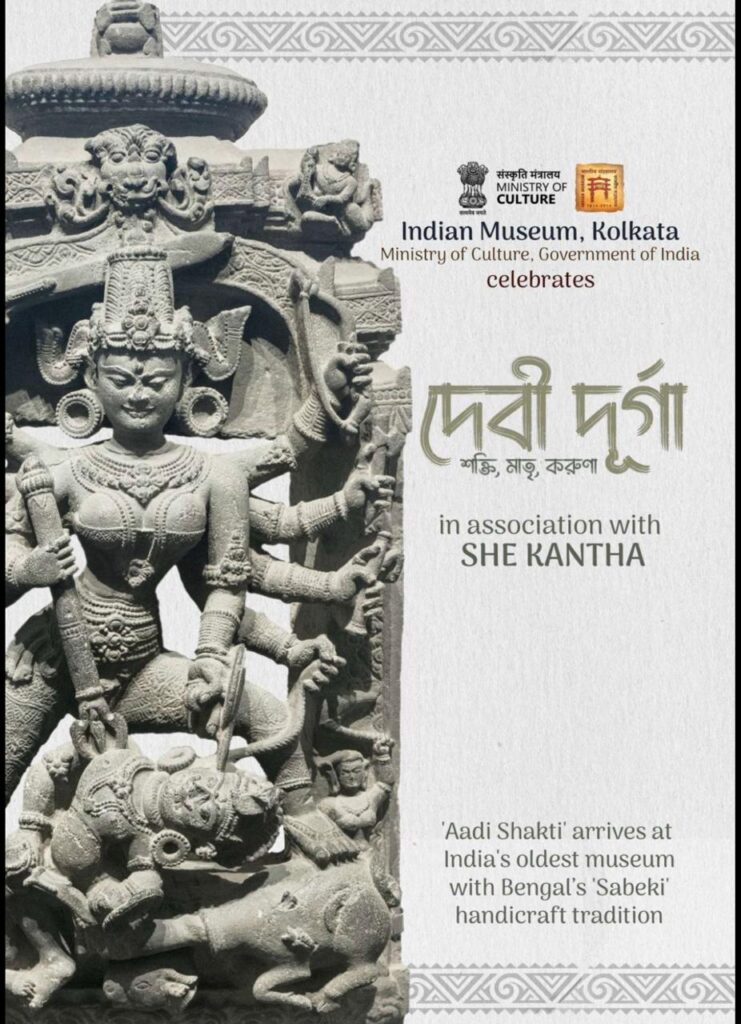
হুগলি নদীর তীরের তিলোত্তমা কলকাতা যখন শরতে শিউলির গন্ধ, কাশের দোলা আর ঢাকের কাঠিতে দুর্গাপূজার আমেজে মেতে ওঠে, তখন তা কেবল ধর্মীয় আচার-অনুষ্ঠানের গণ্ডিতে সীমাবদ্ধ থাকে না। বিশ্বজনীন শিল্পের অঙ্গনে কলকাতার দুর্গাপূজা আজ এক অনন্য সামাজিক-সাংস্কৃতিক আন্দোলন। ২০২১ সালে ইউনেস্কো (UNESCO) কর্তৃক কলকাতার দুর্গাপূজাকে ‘মানবতার অমূল্য সাংস্কৃতিক ঐতিহ্য’ (Intangible Cultural Heritage of Humanity) হিসেবে স্বীকৃতি দেওয়ার পর থেকে এই উৎসবের ক্যানভাস আরও বিস্তৃত হয়েছে। এই ঐতিহাসিক ধারাবাহিকতায় ভারতের অন্যতম প্রাচীন এবং বৃহৎ ঐতিহ্যবাহী প্রতিষ্ঠান — জওহরলাল নেহরু রোডের ‘ইন্ডিয়ান মিউজিয়াম’ — তার ঐতিহাসিক সেন্ট্রাল কোর্টইয়ার্ডে (Central Courtyard) আয়োজন করেছে এক মনোরম প্রদর্শনী ও সাংস্কৃতিক মহোৎসব: ‘দেবী দুর্গা: শক্তি, মাতৃ, করুণা’ (Devi Durga: Śakti, Mātṛ, Karuṇā), আগাম জানিয়েছিলেন ভারতীয় জাদুঘর, কলকাতার অধিকর্তা ড: সায়ন ভট্টাচার্য ।
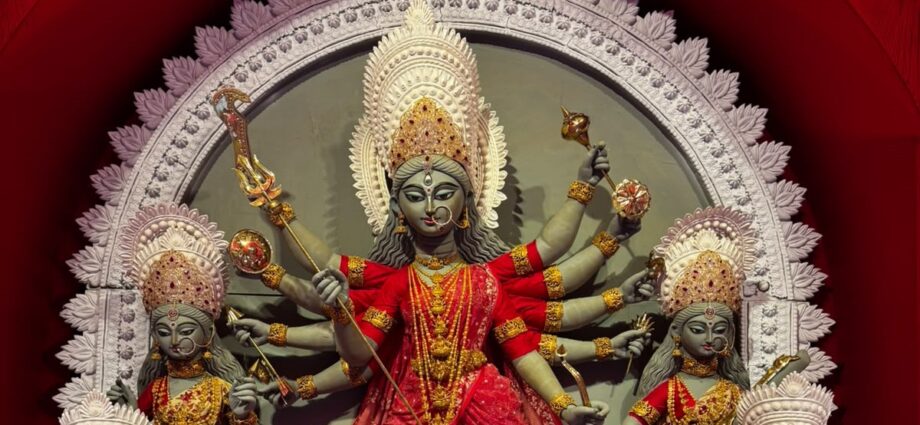
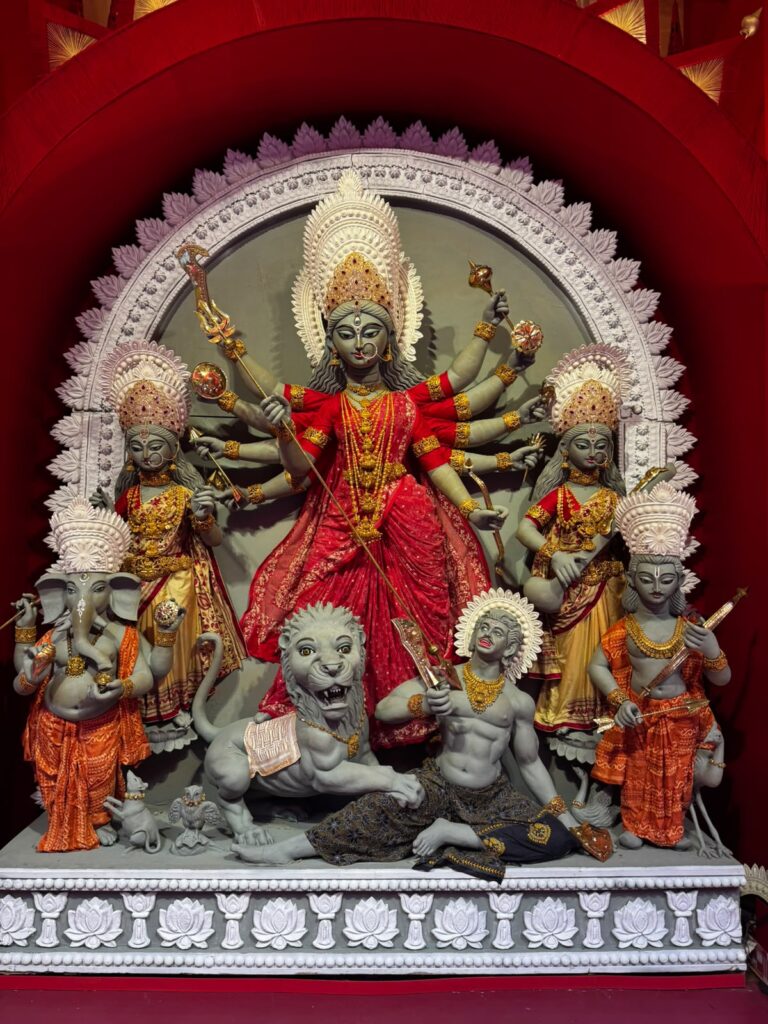
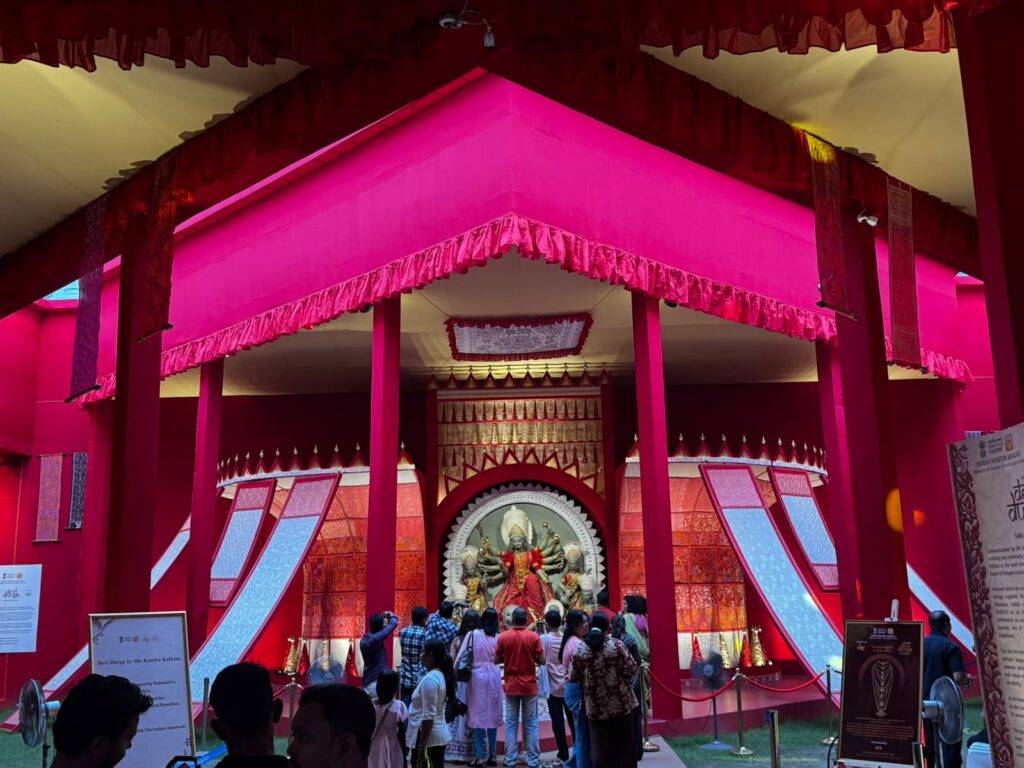
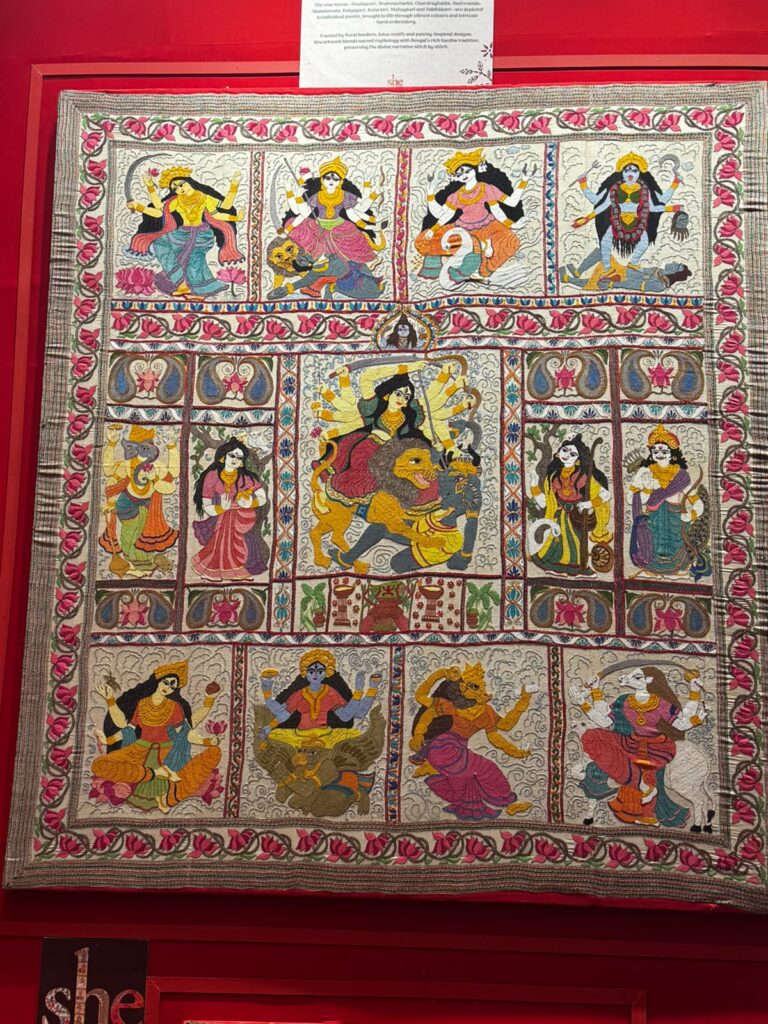
ইন্ডিয়ান মিউজিয়াম, কেন্দ্রীয় সংস্কৃতি মন্ত্রক, সামাজিক সংস্থা ‘শি কাঁথা’ (SHE Kantha) এবং ‘কলকাতা সেন্টার ফর ক্রিয়েটিভিটি’ (KCC)-র যৌথ উদ্যোগে আয়োজিত এই প্রাঙ্গণচিত্রটি কেবল একটি প্রদর্শনশালা নয়; এটি বঙ্গীয় শিল্পকলা, নারী ক্ষমতায়ন, রাজনৈতিক অর্থনীতি এবং প্রত্নতাত্ত্বিক বিবর্তনের এক অপূর্ব মেলবন্ধন। মিউজিয়ামের আইকনিক নব্য-সনাতনী (Neoclassical) স্থাপত্যের খিলানযুক্ত আঙিনায় উন্মুক্ত আকাশের নিচে গড়ে উঠেছে এক অভূতপূর্ব সাবেকি মণ্ডপ। সেখানে শোভা পাচ্ছেন কুমারটুলির প্রখ্যাত মৃৎশিল্পী শান্ত পালের হাতে গড়া আনবেকিং বা কাঁচা মাটির একচালা প্রতিমা। চিরাচরিত শাড়িতে আবৃত সেই প্রতিমাকে ‘ষোড়শ শৃঙ্গার’ সাজে সাজিয়ে তুলেছে শেক্সপিয়ার সরণি ও মানিকতলা প্রধান সড়কের ঐতিহ্যবাহী স্বর্ণপ্রতিষ্ঠান ‘নেমিচাঁদ বামালওয়া অ্যান্ড সন্স’। ২২ ক্যারেটের খাঁটি স্বর্ণালঙ্কারে ভূষিত দেবীর বক্ষে শোভা পাচ্ছে নবরাত্রির ৯টি অবতারের প্রতীকযুক্ত ‘নব অবতার নেকলেস’, সমৃদ্ধির প্রতীক ‘গজলক্ষ্মী হার’ এবং জ্ঞান ও বিবেকের প্রতীক ‘সরস্বতী হার’। এই রূপায়ণ কেবল দেবীর বন্দনা নয়, এটি বাংলার মৃৎশিল্প, স্বর্ণশিল্প এবং সূচিশিল্পের জীবন্ত ঐতিহ্যের এক মহিমান্বিত রাজনৈতিক-সাংস্কৃতিক সঙ্গম।
‘স্বদেশী’ জাতীয়তাবাদ থেকে ‘বিকাশ ভি, বিরাসত ভি’
রাজনৈতিক ও ঐতিহাসিক দৃষ্টিকোণ থেকে পর্যালোচনা করলে ইন্ডিয়ান মিউজিয়ামের এই দুর্গাপূজা প্রদর্শনীটি ভারতের জাতীয়তাবাদী আন্দোলন এবং সমসাময়িক রাষ্ট্রনীতির এক গভীর রাজনৈতিক পাঠ উন্মোচন করে। ভারতের ৮০তম স্বাধীনতা দিবসের লালকেল্লার ভাষণ থেকে সূচিত প্রধানমন্ত্রী নরেন্দ্র মোদীর ‘বিকাশ ভি, বিরাসত ভি’ (উন্নয়নও, ঐতিহ্যও) এবং ‘স্বদেশী’ পণ্য পুনরুজ্জীবনের যে ডাক, তার প্রত্যক্ষ প্রতিফলন ঘটেছে এই মণ্ডপসজ্জায়। কিন্তু এই স্বদেশী চেতনার শিকড় নিহিত রয়েছে ১২০ বছর আগের এক উত্তাল রাজনৈতিক ইতিহাসে।
১৯০৫ সালে ব্রিটিশ ভাইসরয় লর্ড কার্জনের বঙ্গভঙ্গ সিদ্ধান্তের প্রতিবাদে যখন বাংলাজুড়ে স্বদেশী আন্দোলন ও বিদেশি পণ্য বয়কটের আগুন জ্বলে ওঠে, তখন অবনীন্দ্রনাথ ঠাকুর এবং বেঙ্গল স্কুল অব আর্ট জলরঙের ‘ওয়াশ’ (Wash) প্রযুক্তিতে আঁকেন এক কালজয়ী ছবি—‘বঙ্গমাতা’। জাপানি চিত্রশিল্পী ইয়োকোয়ামা তাইকানের থেকে শেখা জলরঙের স্তরীভূত ধোঁয়াটে ও মার্জিত শৈলীতে রচিত ২৬.৬ বাই ১৫.২ সেন্টিমিটারের এই কৃচ্ছ্রসাধনকারী সাধ্বী রূপটি পরে ভগিনী নিবেদিতার হাতে নামান্তরিত হয় ‘ভারত মাতা’ (Bharat Mata) হিসেবে। কাশ্মীর থেকে কন্যাকুমারী পর্যন্ত ব্রিটিশবিরোধী সংগ্রামের দৃশ্যমান প্রতীক হয়ে উঠেছিল এই চিত্র। চতুর্ভূজা ভারত মাতার চার হাতে ধারণ করা চার উপহারে ধরা দিয়েছিল স্বাবলম্বী ভারতের আত্মপরিচয়: ১. তালপাতার পুঁথি: শিক্ষা, প্রজ্ঞা ও আধ্যাত্মিক শিক্ষার প্রতীক। ২. ধানের শীষ: কৃষিপ্রধান দেশের অন্ন ও খাদ্য সুরক্ষার প্রতীক। ৩. শ্বেত বস্ত্রখণ্ড: দেশীয় বস্ত্রবয়ন ও স্বদেশী আন্দোলনের বস্ত্রসূত্রের প্রতীক। ৪. রুদ্রাক্ষের মালা: নৈতিক চরিত্র, শৃঙ্খলা ও জপের প্রতীক।
রবীন্দ্রনাথ ঠাকুর ও রবীন্দ্রভারতী সোসাইটির তত্ত্বাবধানে জোড়াসাঁকো ঠাকুরবাড়ির আর্কাইভে দীর্ঘদিন সংরক্ষিত থাকার পর, ২০১৫ সালের মার্চ মাসে এক ঐতিহাসিক চুক্তির মাধ্যমে ছবিটি কলকাতার ভিক্টোরিয়া মেমোরিয়াল হলের (Victoria Memorial Hall) সুরক্ষিত একক-বস্তু গ্যালারিতে স্থায়ী প্রদর্শনের জন্য স্থানান্তরিত হয়। ইন্ডিয়ান মিউজিয়ামের বর্তমান দুর্গাপূজা প্রদর্শনীটি অবনীন্দ্রনাথের সেই ‘ভারত মাতা’ ও তাঁর অপর বিখ্যাত চিত্রকর্ম ‘গণেশ জননী’র (Ganesh Janani) অন্তর্নিহিত দর্শনকে সংযুক্ত করেছে। আধুনিক রাষ্ট্র পরিচালনা যখন বিদেশি আমদানির বদলে দেশীয় হস্তশিল্প ও কারিগরদের জাতীয় অর্থনীতির মূলধারায় আনার চেষ্টা করেছে, তখন মিউজিয়ামের উঠোনে সুতো ও সুঁচের বুননে কাঁথাশিল্পকে প্রধান মাধ্যম করাটি অত্যন্ত তাৎপর্যপূর্ণ।
শিল্প ইতিহাসবিদ ড. তপতী গুহ-ঠাকুরতা তাঁর বিখ্যাত গ্রন্থ ‘দ্য মেকিং অব আ নিউ ইন্ডিয়ান আর্ট: বেঙ্গল, ১৮৫০-১৯২০’ (কেমব্রিজ ইউনিভার্সিটি প্রেস, ১৯৯২) এবং ‘ইন দ্য নেম অব দ্য দেবী: দুর্গা পূজা অ্যান্ড দ্য মেকিং অব আ পাবলিক আর্ট ফেস্টিভ্যাল’ (নিয়োগী বুকস, ২০১৫)-এ দেখিয়েছেন কীভাবে ১৯ শতকের জমিদারি দুর্গাপূজা ২০ শতকের জাতীয়তাবাদী আন্দোলনে রূপান্তরিত হয়েছিল এবং ২১ শতকে তা বিশ্বজনীন ‘পাবলিক আর্ট’-এর রূপ নিয়েছে। ইন্ডিয়ান মিউজিয়ামের এই উদ্যোগ প্রমাণ করে যে, রাষ্ট্রীয় পৃষ্ঠপোষকতায় ঐতিহ্য প্রদর্শন কেবল অতীত রোমন্থন নয়, এটি ভূ-রাজনৈতিক প্রেক্ষাপটে ভারতীয় সংস্কৃতি ও শক্তির (Soft Power) এক কৌশলগত বিশ্বায়ন।
কাঁথাশিল্প থেকে নারী স্বাবলম্বন
মিডিয়া ইন্টেলিজেন্স ও তথ্য-বিশ্লেষণের আলোয় দেখলে এই প্রদর্শনীর ডিজিটাল উপস্থিতি এবং অর্থনৈতিক ইকোসিস্টেম বা বাস্তুতন্ত্র এক অভূতপূর্ব সাফল্যের চিত্র তুলে ধরে। সামাজিক যোগাযোগ মাধ্যমে (Facebook, Instagram, YouTube) ‘মিউজিয়াম মেমোরিজ’ এবং সাংস্কৃতিক ভিডিওগুলি ভাইরাল হওয়ার ফলে প্রতিদিন হাজার হাজার সাধারণ মানুষ ও পর্যটকের উপস্থিতি মিউজিয়াম প্রাঙ্গণকে এক জনসমুদ্রে পরিণত করেছে। এটিকে সাংস্কৃতিক তথ্যের ভাষায় একটি প্রকৃত ‘ব্লকবাস্টার’ সাফল্য বলা যায়।
এই উদ্যোগে সহযোগী হয়েছে ‘শি কাঁথা’ (SHE Kantha)-র ৪০ বছর পূর্তি এবং তাদের ‘সাহসী রানি’ (Shahoshi Rani) উদ্যোগ। তথ্য অনুসারে, গ্রামীণ বাংলার শত শত নারী হস্তশিল্পী দিনের পর দিন ধরে লক্ষ লক্ষ সূক্ষ্ম সেলাইয়ের মাধ্যমে মণ্ডপের বিশাল কাপড়ের প্যানেল বা ক্যানভাস তৈরি করেছেন। প্রতিটি সেলাই সেখানে স্মৃতি, সংস্কৃতি ও শ্রদ্ধার এক একটি একক।
মিউজিয়ামের সহযোগী প্রতিষ্ঠান ‘এসকেএস ক্যাপিটাল অ্যান্ড রিসার্চ প্রাইভেট লিমিটেড’-এর সামাজিক স্কিলিং উদ্যোগের মাধ্যমে প্রতি বছর মান্ডবা ও তৎসংলগ্ন অঞ্চলের ৫০০-র বেশি গ্রামীণ নারী প্রশিক্ষিত ও সামাজিকভাবে স্বাবলম্বী হচ্ছেন। কাঁথা সেলাইয়ের এই ধৈর্যশীল নারীশ্রমকে সাধারণ ঘরোয়া কাজের গণ্ডি থেকে বের করে জাতীয় মিউজিয়ামের কেন্দ্রীয় উঠোনে প্রদর্শনের মাধ্যমে তাঁদের শ্রমনীতিকে এক আনুষ্ঠানিক অর্থনৈতিক রূপ দেওয়া হয়েছে।
লোকশিল্পের মানচিত্র ও আঞ্চলিক অর্থনীতি
কলকাতা সেন্টার ফর ক্রিয়েটিভিটি (KCC) ও অন্যান্য সংস্থার সহযোগিতায় রাজ্যের ৯টি প্রধান অঞ্চল থেকে আগত প্রথাগত কারুশিল্পের এক বিশাল প্রদর্শনী ও বাণিজ্য ক্ষেত্র গড়ে তোলা হয়েছে। উপস্থিত হয়েছে মেদিনীপুরের ঐতিহ্যবাহী হাতে আঁকা গল্পবলা পটচিত্র, রায়গঞ্জের বাঁশ দিয়ে তৈরি গৃহস্থালি ও আধুনিক নান্দনিক সামগ্রী, পূর্ব বর্ধমানের বাউল বাদ্যযন্ত্র – একতারা ও বাঁশি তৈরির কারিগর, দক্ষিণ দিনাজপুরের স্থানীয় মৃৎশিল্প, পূর্ব বর্ধমানের প্রাচীন ‘লস্ট-ওয়াক্স’ বা ধাতুগলন প্রক্রিয়ায় তৈরি ডোকরা ভাস্কর্য, বর্ধমানের ঐতিহ্যবাহী হস্তনির্মিত অলঙ্কার শৈলী, দক্ষিণ ২৪ পরগনার মোম-প্রতিরোধী ডাই ও টেক্সটাইল বাটিক শিল্প, মুর্শিদাবাদের পরিবেশবান্ধব প্রাকৃতিক পাটতন্তুর সূক্ষ্ম সামগ্রী, পূর্ব বর্ধমানের বিশ্বখ্যাত কাঠের পেঁচা ও ঐতিহ্যবাহী পুতুল।
এই বিশাল বাস্তুতন্ত্র প্রমাণ করে যে, দুর্গাপূজা আজ ধর্মীয় অনুভূতির পাশাপাশি আঞ্চলিক পুঁজির এক অত্যন্ত লাভজনক ও দায়িত্বশীল সামাজিক বিনিয়োগ মাধ্যম ।
প্রত্নতাত্ত্বিক বিবর্তনে ‘মাতৃ’ থেকে ‘মহাশক্তি’র ঐতিহাসিক যাত্রা
প্রত্নতাত্ত্বিক অনুসন্ধানের জায়গা থেকে ইন্ডিয়ান মিউজিয়ামের সংরক্ষিত স্থায়ী গ্যালারি এবং এই বিশেষ প্রদর্শনীর প্রত্নবস্তুগুলির তুলনা অত্যন্ত রোমাঞ্চকর। প্রখ্যাত প্রত্নতত্ত্ববিদ ড. ব্রজীন্দ্রনাথ মুখোপাধ্যায়ের গবেষণাগ্রন্থ ‘আইকনোগ্রাফি অব দেবী দুর্গা ইন বেঙ্গল’ (এশিয়াটিক সোসাইটি, ১৯৯৫) -এর তথ্য অনুসারে, দেবী দুর্গার রূপকল্পনা সিন্ধু সভ্যতা ও হরপ্পার আদি উর্বরতার দেবী (Fertility Cult) থেকে শুরু করে বৈদিক, পৌরাণিক ও মধ্যযুগীয় রীতির এক ধারাবাহিক বিবর্তন।
ইন্ডিয়ান মিউজিয়ামের প্রত্নতাত্ত্বিক গ্যালারি ও বিশেষ প্রদর্শনীতে কালানুক্রমিকভাবে যে দুর্গা মূর্তি ও ঐতিহাসিক উপাদানগুলি উন্মোচিত করা হয়েছে, তার মধ্যে কয়েকটি হলো:
১. খ্রিস্টীয় প্রথম শতকের বেলেপাথরের মহিষাসুরমর্দিনী (ভিটা, কুশাণ যুগ): উত্তরপ্রদেশের ভিটা (Bhita) থেকে প্রাপ্ত এই চার-হাত বিশিষ্ট লাল বেলেপাথরের মূর্তিটি ভারতে দেবী দুর্গার মহিষাসুর বধের অন্যতম প্রাচীনতম কায়িক প্রমাণ। এখানে দেবী অত্যন্ত সরল ও আদিম শক্তিতে মহিষাসুরকে দমন করছেন। ২. দ্বাদশ শতকের ক্লোরাইট পাথরের দশভুজা মহিষাসুরমর্দিনী (মানভূম, পাল-সেন যুগ): পুরুলিয়া/মানভূম অঞ্চল থেকে প্রাপ্ত কালো ক্লোরাইট (Chlorite) পাথরের তৈরি এই অপূর্ব ভাস্কর্যটিতে দেবী পূর্ণাঙ্গ দশভুজা, অস্ত্রশস্ত্রে সজ্জিত এবং মহিষাসুরকে পদদলিত করছেন। এর সূক্ষ্ম খোদাই ও অলঙ্করণ পাল-সেন যুগের ভাস্কর্য শিল্পের চরম উৎকর্ষের প্রতীক। ৩. একাদশ-দ্বাদশ শতকের শ্বেত মার্বেল ভাস্কর্য: মধ্যযুগীয় পূর্ব ভারতের বিরল শ্বেত পাথরের মূর্তি, যেখানে শাস্ত্রীয় আয়ুধগুলির বিশদ বিবরণ মেলে। ৪. দ্বিতীয়-তৃতীয় শতকের মথুরা টেরাকোটা ও উনিশ শতকের অষ্টধাতু মূর্তি: মথুরা থেকে প্রাপ্ত আদি পোড়ামাটির মাতৃকামূর্তি এবং উনিশ শতকের ঐতিহ্যবাহী ধাতব সংকর বা অষ্টধাতুর সাবেকে প্রতিমা রূপায়ন। ৫. চিত্রকলায় মাতৃরূপ: মিউজিয়ামের পেইন্টিং গ্যালারিতে রক্ষিত অবনীন্দ্রনাথ ঠাকুরের বিখ্যাত ‘গণেশ জননী’ (Ganesh Janani), যেখানে দেবী দূর্গা এক স্নেহময়ী বাঙালি জননী হিসেবে শিশুগণেশকে নিয়ে ক্রীড়ারত। এর পাশাপাশি ১৮ ও ১৯ শতকের পাহাড়ি মিনিয়েচার এবং ঐতিহ্যবাহী কালীঘাট পটচিত্রের ‘অন্নপূর্ণা’ ও দুর্গার রূপাবলী।
এই প্রত্নতাত্ত্বিক উপাদানগুলি প্রমাণ করে যে, দুর্গা পূজা কোনও এক একক যুগে বা আচারে স্থবির হয়ে থাকেনি। আদিবাসী উর্বরতার দেবী (মাতৃরূপ) থেকে মহাজাগতিক অশুভ শক্তি বিনাশকারী রণরঙ্গিনী দেবী (মহাশক্তি) হিসেবে দুর্গার এই বিবর্তনই ভারতীয় সংস্কৃতি ও জনজীবনের অন্যতম মূল ভিত্তি।
ঐতিহ্য, স্মৃতি ও আধুনিকতার মেলবন্ধন
ইন্ডিয়ান মিউজিয়ামের সেন্ট্রাল কোর্টইয়ার্ডে আয়োজিত ‘দেবী দুর্গা: শক্তি, মাতৃ, করুণা’ কেবল একটি পূজা উদযাপন বা শিল্প প্রদর্শনী হিসেবে থেকে যায় না; এটি হয়ে উঠেছে এক জীবন্ত ইতিহাস ও সংস্কৃতি – বলছিলেন কলকাতা জাদুঘরের অধিকর্তা ড: সায়ন ভট্টাচার্য। সুঁচ আর সুতোর প্রতিটি ফোঁড়ে কাঁথাশিল্পীরা যে স্মৃতি আর ভক্তির গল্প বুনেছেন, তা ইতিহাস ও আধুনিকতার মাঝে এক নতুন সেতু নির্মাণ করেছে। ১৯০৫ সালের বঙ্গভঙ্গ আন্দোলনের ‘ভারত মাতা’র স্বদেশী ভাবনা থেকে শুরু করে ইউনেস্কো স্বীকৃত ২০২৬ সালের বিশ্বজনীন দুর্গাপূজা—এই দীর্ঘ সময়রেখায় দেবী দুর্গা কেবল পূজিতা দেবী নন, তিনি বাঙালির জাতীয় সত্তা, নারী শক্তির প্রতীক এবং সৃজনশীল অর্থনীতির এক অফুরন্ত উৎস।
Durga Puja at the Kolkata Museum: The Confluence of Swadeshi Consciousness and Cultural Economy
Historical Context and the New Dimension of Durga Puja
When Kolkata, the City of Joy along the banks of the Hooghly River, comes alive in autumn with the fragrance of Shiuli flowers, the swaying of Kash grass, and the rhythmic beat of Dhak drums, Durga Puja transcends the boundaries of a mere religious ritual. On the global stage of art, Kolkata’s Durga Puja today stands as a unique socio-cultural movement. Ever since UNESCO recognized Kolkata’s Durga Puja as an ‘Intangible Cultural Heritage of Humanity’ in 2021, the festival’s canvas has expanded even further. In this historical continuum, one of India’s oldest and grandest heritage institutions—the Indian Museum on Jawaharlal Nehru Road—has hosted a splendid exhibition and cultural festival in its historic Central Courtyard titled ‘Devi Durga: Śakti, Mātṛ, Karuṇā’ (Goddess Durga: Power, Motherhood, Compassion), as announced in advance by Dr. Sayan Bhattacharya, Director of the Indian Museum, Kolkata.
Organized as a joint initiative by the Indian Museum, the Union Ministry of Culture, the social organization ‘SHE Kantha’, and the ‘Kolkata Centre for Creativity’ (KCC), this courtyard installation is far more than a mere display gallery; it represents a magnificent confluence of Bengali art, women’s empowerment, political economy, and archaeological evolution. Under the open sky within the arched courtyard of the Museum’s iconic Neoclassical architecture, an unprecedented traditional pavilion (sabeki mandap) has been erected. Adorning it is an unbaked, raw clay traditional (ekchala) idol crafted by the renowned artisan Santo Pal of Kumartuli. Draped in traditional attire, the idol has been adorned with the ‘Solah Shringar’ (sixteen traditional adornments) by the heritage jewellery house ‘Nemichand Bamalwa & Sons’ of Shakespeare Sarani and Manicktalla Main Road. Embellished with 22-karat pure gold jewellery, the Goddess’s chest features the ‘Nav Avatar Necklace’ symbolizing the nine avatars of Navratri, the ‘Gajalakshmi Har’ representing prosperity, and the ‘Saraswati Har’ embodying wisdom and conscience. This manifestation is not merely an invocation of the Divine Mother; it is a glorious political-cultural confluence of Bengal’s living heritage in terracotta, goldsmithery, and embroidery.
From ‘Swadeshi’ Nationalism to ‘Vikas Bhi, Virasat Bhi’
Analyzed from a political and historical perspective, this Durga Puja exhibition at the Indian Museum unveils a profound political lesson connecting India’s nationalist movement with contemporary statecraft. The call for ‘Vikas Bhi, Virasat Bhi’ (Development along with Heritage) and the revival of ‘Swadeshi’ products—articulated by Prime Minister Narendra Modi during his address from the Red Fort on India’s 80th Independence Day—finds direct reflection in this pavilion’s artistic design. However, the roots of this Swadeshi consciousness lie deep within a turbulent political history that unfolded 120 years ago.
In 1905, when the fires of the Swadeshi movement and the boycott of foreign goods spread across Bengal in protest against British Viceroy Lord Curzon’s Partition of Bengal, Abanindranath Tagore and the Bengal School of Art created a timeless masterpiece using the watercolour ‘wash’ technique titled ‘Banga Mata’ (Mother Bengal). Painted in a muted, sophisticated, layered smokey style learned from Japanese artist Yokoyama Taikan, this 26.6 by 15.2 cm depiction of an ascetic holy figure was later rechristened ‘Bharat Mata’ (Mother India) by Sister Nivedita. The painting became a visual symbol of the anti-British struggle from Kashmir to Kanyakumari. The four sacred gifts held in the four hands of the four-armed Bharat Mata encapsulated the self-reliant identity of an independent India:
Palm-leaf Manuscript: Symbolizing education, wisdom, and spiritual learning.
Sheaf of Paddy: Symbolizing food security and sustenance for an agrarian nation.
Piece of White Cloth: Symbolizing indigenous textile weaving and the Swadeshi thread movement.
Rudraksha Rosary: Symbolizing moral character, spiritual discipline, and meditation.
After remaining preserved for decades in the archives of Jorasanko Thakurbari under the custodianship of Rabindranath Tagore and the Rabindra Bharati Society, the painting was moved in March 2015 under a historic agreement to a secure, single-object gallery at Kolkata’s Victoria Memorial Hall for permanent display. The current Durga Puja exhibition at the Indian Museum connects the underlying philosophy of Abanindranath’s ‘Bharat Mata’ with his another famous artwork, ‘Ganesh Janani’ (Mother of Ganesh). At a time when modern state governance seeks to bring indigenous handicrafts and artisans into the economic mainstream instead of relying on foreign imports, adopting Kantha embroidery—woven with needle and thread—as the primary medium in the Museum’s courtyard carries immense significance.
Art historian Dr. Tapati Guha-Thakurta, in her seminal books ‘The Making of a New Indian Art: Bengal, 1850–1920’ (Cambridge University Press, 1992) and ‘In the Name of the Goddess: Durga Puja and the Making of a Public Art Festival’ (Niyogi Books, 2015), demonstrated how the 19th-century zamindari Durga Puja was transformed into the 20th-century nationalist movement and eventually evolved into 21st-century global ‘public art’. This initiative by the Indian Museum proves that state-sponsored heritage showcases are not merely nostalgic retrospections, but rather a strategic globalization of Indian culture and soft power in a geopolitical context.
From Kantha Embroidery to Female Self-Reliance
Viewed through the lens of media intelligence and data analysis, the digital footprint and economic ecosystem of this exhibition reflect an unprecedented success. With ‘Museum Memories’ and cultural videos going viral across social media platforms (Facebook, Instagram, YouTube), daily visits by thousands of citizens and tourists transformed the Museum premises into a sea of people. In the lexicon of cultural analytics, this can be termed a true ‘blockbuster’ success.
Partnering in this initiative is ‘SHE Kantha’, marking its 40th anniversary alongside its ‘Shahoshi Rani’ (Brave Queen) campaign. According to data, hundreds of female craft artisans from rural Bengal spent days crafting the massive fabric panels and canvases of the pavilion through millions of intricate stitches. Each stitch stands there as a distinct unit of memory, culture, and devotion.
Through the social skilling program of the Museum’s partner institution, ‘SKS Capital & Research Private Limited’, over 500 rural women from Mandava and adjacent areas receive training and attain socio-economic independence every year. By bringing this painstaking female labor of Kantha embroidery out from domestic confines and displaying it in the central courtyard of a national museum, their labor ethos has been granted formal economic dignity.
Folk Art Mapping and Regional Economy
In collaboration with the Kolkata Centre for Creativity (KCC) and other organizations, a vast exhibition and trade hub representing traditional handicrafts from 9 key regions of the state was established. The ensemble brought together hand-painted storytelling Pattachitra from Medinipur, household and modern aesthetic bamboo items from Raiganj, Baul musical instrument makers (Ektara and flute) from Purba Bardhaman, local pottery from Dakshin Dinajpur, ancient ‘lost-wax’ cast metal Dokra sculptures from Purba Bardhaman, traditional handmade jewellery art from Bardhaman, wax-resist dye and textile Batik craft from South 24 Parganas, eco-friendly natural jute fiber creations from Murshidabad, and world-famous wooden owls and traditional dolls from Purba Bardhaman.
This vast ecosystem demonstrates that Durga Puja today is not only a matter of religious sentiment but also a highly profitable and socially responsible medium for regional capital investment.
Historical Journey from ‘Matri’ to ‘Mahashakti’ in Archaeological Evolution
From an archaeological perspective, comparing the permanent holdings of the Indian Museum with the artifacts showcased in this special exhibition is profoundly fascinating. According to research documented by renowned archaeologist Dr. Bratindra Nath Mukherjee in his scholarly work ‘Iconography of Devi Durga in Bengal’ (The Asiatic Society, 1995), the iconographic concept of Goddess Durga represents a continuous evolution spanning from the ancient fertility cults of the Indus Valley and Harappa to Vedic, Puranic, and medieval traditions.
Among the chronologically arranged Durga sculptures and historical artifacts unveiled in the Indian Museum’s archaeological galleries and special exhibition are:
1st-Century CE Sandstone Mahishamardini (Bhita, Kushan Period): Obtained from Bhita in Uttar Pradesh, this four-armed red sandstone sculpture stands as one of the earliest physical evidences of Goddess Durga slaying Mahishasura in India. Here, the Goddess subdues Mahishasura with raw, primal power.
12th-Century CE Chlorite Stone Ten-Armed Mahishamardini (Manbhum, Pala-Sena Period): Hailing from the Purulia/Manbhum region, this exquisite black chlorite stone sculpture depicts the Goddess as ten-armed, fully armed, and trampling Mahishasura. Its delicate carving and ornamentation epitomize the pinnacle of Pala-Sena sculptural artistry.
11th–12th Century White Marble Sculptures: Rare white marble idols from medieval Eastern India showcasing detailed depictions of classical scriptural weapons (ayudhas).
2nd–3rd Century Mathura Terracotta & 19th-Century Octo-Alloy (Ashtadhatu) Idols: Early terracotta mother goddess figures from Mathura alongside 19th-century traditional metal alloy representations.
Motherhood in Painting: Abanindranath Tagore’s celebrated painting ‘Ganesh Janani’ (Mother of Ganesh), preserved in the Museum’s Painting Gallery, portrays Goddess Durga as an affectionate Bengali mother playing with infant Ganesh. Alongside this are 18th and 19th-century Pahari miniatures and traditional Kalighat patachitra renderings of ‘Annapurna’ and Durga.
These archaeological elements prove that Durga Puja never remained static within a single era or ritual practice. This evolution of Durga—from a tribal fertility goddess (Matri) to the cosmic destroyer of evil forces (Mahashakti)—forms one of the fundamental pillars of Indian culture and public life.
The Union of Heritage, Memory, and Modernity
The festival ‘Devi Durga: Śakti, Mātṛ, Karuṇā’, hosted in the Central Courtyard of the Indian Museum, does not remain merely a Puja celebration or an art exhibition; it has become a living embodiment of history and culture, noted Dr. Sayan Bhattacharya, Director of the Indian Museum, Kolkata. The stories of memory and devotion woven into every stitch by the Kantha artisans construct a new bridge between history and modernity. From the Swadeshi ideal of ‘Bharat Mata’ during the 1905 Partition of Bengal movement to the UNESCO-recognized global Durga Puja of 2026—across this long timeline, Goddess Durga is not merely a worshipped deity, but a symbol of Bengali national identity, female empowerment (Nari Shakti), and an inexhaustible fountainhead of the creative economy.